
7 Best Primers For Pressure Treated Wood in 2026
This post contains affiliate links. As an Amazon Associate, we earn from qualifying purchases.
The Rust-Oleum RockSolid Deck Start Wood Primer is our best overall pick because it bonds to damp or dry pressure treated wood without sanding, dries clear, and accepts any solid topcoat. For eco-conscious projects, the WOCA Denmark Exterior Wood Primer minimizes cracking while letting the natural grain show. The Zinsser Bulls Eye 1-2-3 is the best all-surface choice for mixed-material jobs.
Pressure treated wood resists rot but arrives wet from the treatment process, and its natural tannins can bleed through paint if not properly sealed. A dedicated primer locks down those tannins, helps the topcoat adhere, and prevents premature peeling. Choosing the wrong primer can lead to costly rework.
We built this guide by analyzing manufacturer specifications, reading owner feedback patterns, and consulting expert finishing advice from paint industry sources. Our picks cover different project sizes, budgets, and finish requirements so you can match the right primer to your specific job.
Top 7 Primers For Pressure Treated Wood in the Market
Certain content that appears on this site comes from Amazon. This content is provided "as is" and is subject to change or removal at any time.
The Best Primers For Pressure Treated Wood, Reviewed
Rust-Oleum RockSolid Deck Start Wood Primer

What We Like
- No sanding or stripping needed
- Works on damp or dry wood
- Dries clear for any topcoat
- Low-VOC with minimal odor
Trade-offs
- Only for solid topcoats, not transparent stains
- 1-2 hour dry time before topcoat
A single coat covering 450 square feet and drying to touch in one hour means this primer can finish a full deck in a morning, not a weekend. Rust-Oleum RockSolid Deck Start works on weathered, worn, or previously coated exterior wood, and its adhesion chemistry grabs onto old coatings without sanding or stripping. That alone saves hours of prep work. It even goes onto damp wood, so a sudden rain shower doesn’t stop your project. For anyone tackling a large exterior wood surface and wanting a fast, low-odor solution, this primer is a practical choice for the job.
The trade-off is that it only works under solid color topcoats, paint or solid stain, so if you plan to use a semi-transparent or clear finish, this primer won’t deliver the look you want. Compared to the WOCA Denmark Exterior Wood Primer, which is a clear primer for exterior wood, RockSolid is designed for opaque coatings. At 9.0 pounds per gallon, it’s heavier than a quart-sized primer like Zinsser Bulls Eye 1-2-3, but the coverage and elimination of sanding make it worth the extra weight for big projects.
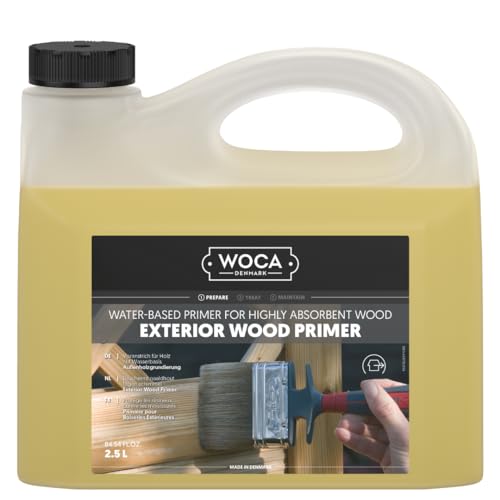
WOCA Denmark Exterior Wood Primer
What We Like
- Environmentally friendly water-based formulation
- Minimizes cracking and splitting of wood
- Enhances adhesion of subsequent finishes
- No offensive odors during application
Trade-offs
- Clear finish offers no stain-blocking color
- Not formulated for use on metal or drywall
This water-based primer minimizes cracking and splitting in pine, cedar, spruce, and fir wood, so it helps extend the service life of your exterior wood projects. Because it’s clear, the natural grain of the wood stays visible while the primer works to reduce future damage. Its environmentally friendly formulation has no offensive odors, making it more pleasant to apply in enclosed areas or when you’re sensitive to strong chemical smells.
The trade-off is that this is a clear primer, so it won’t block stains or cover discoloration the way a pigmented primer like Zinsser Bulls Eye 1-2-3 can. If your pressure treated wood has dark blotches or you need a uniform base for a solid paint topcoat, you might want to look at that all-surface stain-blocking option instead. For projects where the wood’s appearance matters and you want a low-odor, eco-conscious start, this primer fits the bill.
Product photos
Zinsser Bulls Eye 1-2-3 Water-Base Primer & Sealer

What We Like
- Bonds to glossy surfaces without sanding
- Works indoors and outdoors
- Blocks stains with special resins
- Rust inhibitive for metal surfaces
Trade-offs
- Quart size covers less area than gallon options
- Not formulated specifically for pressure-treated wood
A 35°F minimum application temperature means you can keep working into chilly fall days, long after other primers have gone back to the shed. Zinsser Bulls Eye 1-2-3 bonds to glossy surfaces without scuff sanding, saving you a full step when painting over slick trim or previously coated wood. Its stain-blocking resins help block common stains, and the rust-inhibitive formula allows priming of ferrous metal surfaces with the same can. For anyone juggling multiple surfaces on one project, this single primer covers interior and exterior use, glossy bonding, and metal priming.
A quart covers only a limited area, so for a deck or fence you will likely need a gallon. Compared to Rust-Oleum RockSolid Deck Start Wood Primer, which comes in a full gallon and is designed for deck preparation, Zinsser’s all-surface versatility may require more frequent repurchasing for large-scale work. If your project mixes different materials like wood, glossy trim, and metal, this primer simplifies the load. For a whole deck rebuild, the dedicated deck primer in a larger size may be more economical.
Zinsser B-I-N Shellac Primer-Sealer

What We Like
- Blocks water stains, knots, sap
- Seals deep stains and odors
- Dries in 15 minutes
- Sands easily to powder when dry
Trade-offs
- Small coverage area per can (20-24 sq. ft.)
- Shellac base means strong solvent odor
The trade-off is the strong solvent smell from the shellac and the small per-can coverage. For a full deck, you would need many cans, so a product like Rust-Oleum RockSolid Deck Start Wood Primer, which comes in a gallon size, might be more practical for large open areas. But when you need to lock in a bleeding knot or a stubborn stain, this primer seals fast and stays put.
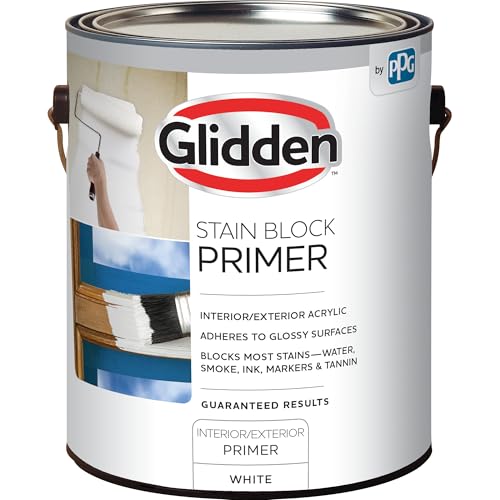
Glidden Interior/Exterior Stain Block Primer
What We Like
- Blocks tannin stains from wood
- Adheres to glossy surfaces
- Dries in 1 hour
- Soap and water cleanup
Trade-offs
- Not formulated specifically for pressure treated wood
- Requires a separate topcoat for finished look
A one-hour wait before topcoating means you can apply this primer and move on to painting the same day. The acrylic formula blocks common stains like water, smoke, ink, markers, and tannins, and it adheres to glossy surfaces. For anyone needing a stain-blocking primer for an outdoor project, this product covers the basics without extra steps.
This is a general-purpose interior/exterior primer, not a specialized formula for pressure treated wood. The Rust-Oleum RockSolid Deck Start Wood Primer is marketed for damp or dry wood surfaces and promotes topcoat adhesion without sanding, while the Glidden primer does not specify compatibility with pressure treated lumber. If your wood is still damp from treatment, the Rust-Oleum may be a better fit, but for dry, clean surfaces this Glidden primer works as a stain blocker.
Product photos
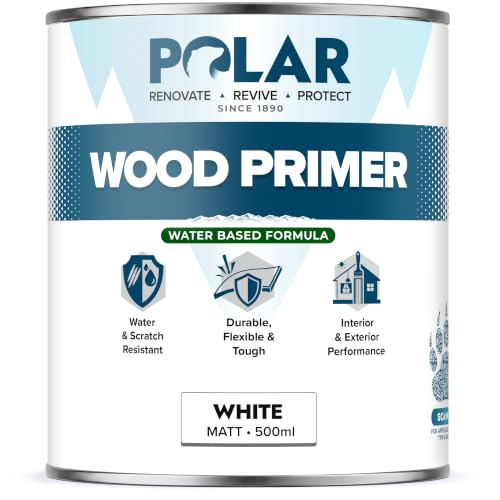
Polar Specialist Coatings Wood Primer
What We Like
- Dries in 1-2 hours
- Flexible base resists cracking and repels water
- Penetrates bare wood for good adhesion
Trade-offs
- 500ml size limits large projects
- Requires clean, dry surface before use
- Needs compatible topcoat for full protection
Quick-drying primers save hours on a project, and this one dries in 1-2 hours so you can recoat after just 4 hours. That speed makes it ideal for weekend DIYers or anyone juggling multiple coats on doors, frames, or furniture. The flexible base helps resist cracking and repel water, which matters for exterior wood exposed to rain and sun.
The Polar Specialist Coatings Wood Primer covers 10-12 m² per liter, which is enough for a single door or a few baseboards. That 500ml can size keeps the job manageable for small projects like furniture or trim. The Rust-Oleum RockSolid Deck Start Wood Primer comes in a gallon, but this Polar primer dries in 1-2 hours and can be recoated after 4 hours. So you can move quickly from prep to finish on detail work.
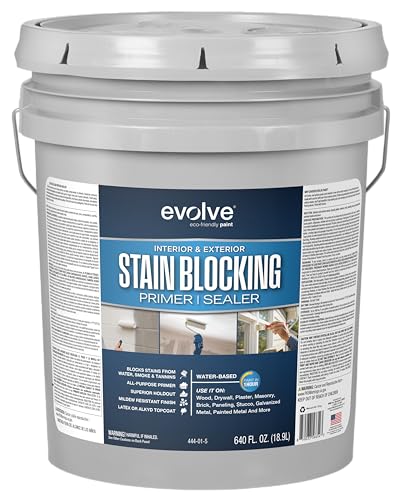
Evolve Stain Blocking Primer & Sealer
What We Like
- Heavy-duty stain blocking for tough marks
- Primer and sealer in one coat
- Fast drying, ready in 1-2 hours
- Maximum adhesion on tricky surfaces
Trade-offs
- 5-gallon size is bulky for small projects
- Requires a topcoat for final finish
A high-solids formula that acts as both primer and sealer means this product locks in tough stains like tannin, water marks, and grease in a single coat. For pressure treated wood, where tannin bleed-through is a constant headache, that barrier is exactly what you need. It dries fast enough to recoat in an hour or two, so you can move through a deck or fence project without losing a day. This is the pick for anyone who wants maximum stain blocking without the fumes of an oil-based primer.
The trade-off comes down to scale and chemistry. At five gallons, this is a serious investment of material, fine for a whole deck or siding, but overkill for a single planter box or small repair. The water-based formula keeps odors low and cleanup easy, which is a practical advantage for occupied homes or enclosed spaces. If you need heavy-duty stain blocking on a big job and want to stay low-VOC, this is your best bet.
Product photos
How We Evaluated Primers For Pressure Treated Wood
Our evaluation focused on manufacturer data for adhesion properties, dry times, and surface compatibility. We cross-referenced these specs with patterns in owner feedback to understand real-world performance on pressure treated lumber, which behaves differently than kiln-dried wood.
We prioritized four criteria: tannin-blocking ability, which is the primer’s capacity to stop brown stains from bleeding through the topcoat. We also looked at surface preparation requirements, whether sanding, stripping, or waiting for the wood to dry is needed. Dry time mattered, meaning how long before you can apply the topcoat. And we considered finish compatibility, or which topcoats, solid stains, paints, or transparent stains the primer accepts.
The honest limit of a research-led evaluation is that we cannot replicate the many variables of a real deck or fence project, wood moisture content, weather during application, and substrate age all affect results. We recommend buying a quart first to test adhesion and stain blocking on a small section of your project.
What To Look For In Primers For Pressure Treated Wood
Choosing the right primer for pressure treated wood comes down to matching the product to your project size, topcoat type, and surface condition. Here are the key factors to consider.
The best primer for pressure treated wood stops tannin bleed, bonds to damp or dry wood without sanding, and dries fast enough to keep your project moving. Match the primer to your topcoat, solid stains and paint need different primers than transparent finishes.
Tannin-Blocking Performance
Pressure treated wood contains high levels of tannins that can leach through paint as yellow or brown stains. A primer with dedicated stain-blocking resins, like the shellac-based Zinsser B-I-N or the heavy-duty Evolve Stain Blocking Primer, is essential for preventing bleed-through. Water-based primers labeled “stain blocking” typically use specialized resins rather than simple latex binders.
Surface Preparation Requirements
Some primers let you skip the sanding step entirely. The Rust-Oleum RockSolid Deck Start works on both damp and dry pressure treated wood, saving hours of prep on large decks. Others, like the Polar Specialist Coatings Wood Primer, require a clean, dry surface. Check whether the primer needs the wood to reach a certain moisture content, most water-based primers prefer wood below 15% moisture.
Dry Time and Recoat Window
Fast-drying primers like the Zinsser B-I-N (15 minutes) and Glidden Stain Block Primer (1 hour) let you apply a topcoat the same day. Slower-drying options like the Rust-Oleum RockSolid need 1-2 hours before topcoating. Consider your climate: cooler or more humid conditions extend dry times for all water-based primers.
- Does the primer list a specific recoat window (minimum and maximum time before topcoat)?
- Is the dry time listed at a standard temperature or will it vary?
- Can you apply a second primer coat if needed without sanding between coats?
- Does the primer require a specific topcoat type, or is it universal?
A good rule of thumb: if you can press a paper towel against the primed surface without it sticking, the primer is ready for topcoat.
Primers For Pressure Treated Wood Compared
The table below compares each primer’s key specs side by side, including surface compatibility, dry time, and stain-blocking ability.
| Product | Type | Dry Time | Application |
|---|---|---|---|
| Rust-Oleum RockSolid Deck Start Wood Primer | Water-based | 1 hour to touch | Damp or dry wood |
| WOCA Denmark Exterior Wood Primer | Water-based | N/A | N/A |
| Zinsser Bulls Eye 1-2-3 Water-Base Primer & Sealer | Water-base | N/A | Interior & exterior |
| Zinsser B-I-N Shellac Primer-Sealer | Shellac | 15 minutes to touch | Interior/exterior wood |
| Glidden Interior/Exterior Stain Block Primer | Acrylic primer | 1 hour to topcoat | Interior/exterior |
| Polar Specialist Coatings Wood Primer | N/A | 1-2 hours | Interior and exterior wood |
| Evolve Stain Blocking Primer & Sealer | Water-based | 1-2 hours to topcoat | Interior & Exterior |
Frequently Asked Questions
Do I need a special primer for pressure treated wood?
Yes, pressure treated wood has high moisture content and tannins that can bleed through standard paint primers. A primer formulated for pressure treated wood, like the Rust-Oleum RockSolid Deck Start or Zinsser B-I-N, contains resins designed to seal the wood and block tannin stains from reaching your topcoat.
How long should pressure treated wood dry before priming?
Pressure treated wood should typically dry for a period of time after purchase, depending on climate and lumber thickness. The wood is ready to prime when moisture content reads below a certain percentage on a moisture meter, or when water beads on the surface rather than soaking in. Some primers, like the Rust-Oleum RockSolid, can be applied to damp wood for faster projects.
Can I use regular latex primer on pressure treated wood?
Regular latex primer often fails on pressure treated wood because it cannot block the tannins that naturally bleed from the wood. The moisture in pressure treated lumber can also cause standard primers to peel. Use a dedicated primer designed for pressure treated wood or a stain-blocking formula like the Zinsser Bulls Eye 1-2-3.
What happens if I don’t prime pressure treated wood before painting?
Skipping primer on pressure treated wood usually leads to tannin stains bleeding through your topcoat within weeks or months. The paint may also peel prematurely because the wood’s moisture content prevents proper adhesion. Priming seals the wood, locks down tannins, and creates a uniform surface for the paint to grip.
Should I use oil-based or water-based primer on pressure treated wood?
Water-based primers are the better choice for pressure treated wood because they allow the wood to continue drying and off-gassing after application. Oil-based primers can trap moisture inside the wood, leading to peeling. Modern water-based formulas like the WOCA Denmark Exterior Wood Primer and Rust-Oleum RockSolid offer excellent adhesion with low odor.
The Bottom Line
For most homeowners refinishing a pressure treated deck or fence, the Rust-Oleum RockSolid Deck Start Wood Primer is the best choice. It skips the sanding step, bonds to damp wood, and dries clear so any solid topcoat works over it. This primer handles the unique challenges of pressure treated lumber, moisture and tannins, without added hassle.
If your project is small or you need a fast fix for knotty boards, the Zinsser B-I-N Shellac Primer-Sealer dries in 15 minutes and blocks even heavy tannin stains. For large-scale outdoor jobs where stain blocking and low odor matter, the Evolve Stain Blocking Primer & Sealer in a 5-gallon bucket offers the best value per square foot.
The single most important factor when buying primer for pressure treated wood is tannin-blocking ability. No other feature matters if your topcoat turns brown from bleed-through within weeks. Pick a primer that specifically lists stain blocking for pressure treated wood, and your paint job will last.
