
9 Best Paper For Pastels in 2026
This post contains affiliate links. As an Amazon Associate, we earn from qualifying purchases.
For pastel artists, the surface you choose is as important as the pigment. The Canson Mi-Teintes Velvet Pastel Paper Pad is our Best Overall pick because its velvet surface allows for smooth layering and eliminates the need for fixative, while holding up to wet techniques and gesso. For those who need maximum layer capacity, the Somime Sanded Pastel Paper Pad offers a heavyweight sanded surface, and the Ampersand Museum Series Pastelbord provides a rigid board for heavy, wet layering.
The challenge with pastel paper is balancing tooth, weight, and archival quality. A paper that is too smooth won’t hold enough pigment, while one that is too soft may buckle under wet underpainting. Artists also need to consider whether they prefer a colored background or a neutral tone.
This guide is based on manufacturer specifications, expert round-ups, and patterns in owner feedback. We evaluated nine top pastel papers across key criteria to help you match the right surface to your technique.
Top 9 Papers For Pastels in the Market
Certain content that appears on this site comes from Amazon. This content is provided "as is" and is subject to change or removal at any time.
The Best Papers For Pastels, Reviewed
Canson Mi-Teintes Velvet Pastel Paper Pad

What We Like
- Velvet surface for smooth layering
- Eliminates need for fixative
- Withstands wet techniques and gesso
- Archival and acid-free quality
Trade-offs
- Only 12 sheets per pad
- Limited to grey tones in this pad
- Heavy 430gsm paper reduces portability
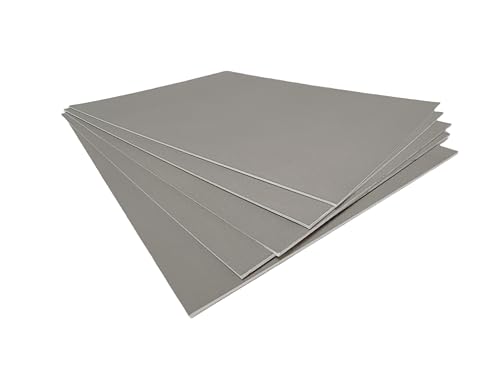
A 264 lb / 430 gsm weight makes this paper exceptionally durable, holding up to layered pastel strokes and wet techniques like watered pastel or gesso mixes. The velvet surface is the key feature here: it allows smooth application, unlimited layering, and eliminates the need for fixative, so your finished piece stays intact. This paper suits artists who want a professional-grade surface that can handle heavy, experimental work while keeping colors vibrant and well-adhered.
You get 12 sheets per pad, and the grey tones limit color options for those who prefer a wider variety of backgrounds. The Somime Sanded Pastel Paper Pad offers 12 mixed colors, but the Canson velvet surface is designed for smooth layering without fixative, so you trade quantity and color range for a specialized finish. Artists who want an archival surface and don’t mind the limited quantity will find this suitable.
Somime Sanded Pastel Paper Pad 600gsm
What We Like
- Heavy 600gsm paper resists buckling
- Abrasive surface grips pastel layers well
- 12 assorted colors offer variety
- Works with wet and dry underpainting
Trade-offs
- Only 12 sheets per pad
- Limited to 9×12 inch size
- No archival or acid-free claim stated
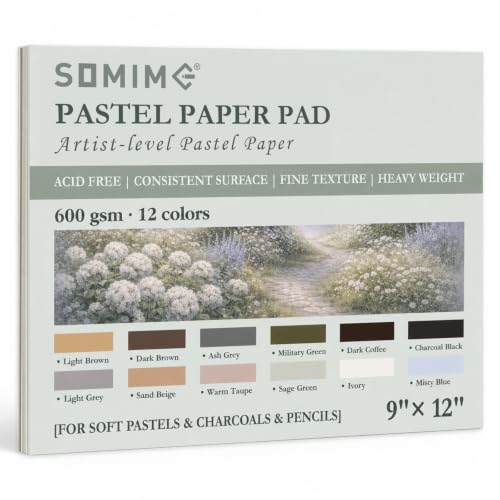
The Somime pastel paper pad uses 600gsm weight paper, which is very thick and resists buckling even with wet underpainting. The sanded surface grips pastel layers well, allowing you to blend and layer without colors turning into mud too easily. This combination of heavy weight and abrasive tooth makes it a strong choice for artists who work with multiple layers or wet techniques and want a stable, textured surface.
The trade-off is that you get only 12 sheets in the pad, and the 9×12 inch format may feel restrictive if you prefer larger compositions. For comparison, the Canson Mi-Teintes Velvet pad offers a slightly lighter 430gsm weight but comes in a larger 9.4×12.6 inch size, which some artists might prefer for bigger studies.
Product photos
Ampersand Museum Series Pastelbord

What We Like
- Holds more layers than pastel paper
- pH neutral and non-yellowing coating
- Works with wet or dry techniques
- Durable hardboard panel construction
Trade-offs
- Small 5×7 inch size limits large works
- Only 4 panels per pack
A gesso and clay coated hardboard panel with a granular marble dust finish holds more layers than pastel paper, so you can build up your work without the surface losing its tooth. It works with wet or dry pastel techniques as well as acrylics, which gives you flexibility if you like to combine media. The pH neutral, non-yellowing coating helps keep colors from shifting over time, a useful feature for pieces you plan to sell or display.
These Ampersand Pastelbord panels come in a small 5×7 inch size and only four per pack, so they are better suited for studies or small finished works rather than large-scale pieces. Compared to the Canson Mi-Teintes Velvet Pastel Paper Pad, which offers larger sheets in a pad format, the Pastelbord gives you a rigid, durable hardboard surface that is much more durable than sanded pastel paper. If you want a sturdy support that can handle layering and mixed techniques, this is a good option.
Product photos
Winsor & Newton Professional Pastel Paper Pad

What We Like
- Archival, acid-free paper resists aging
- Grained surface grips pastel pigment well
- Two-sided: rough and smooth options
- 24 sheets per pad for extended use
Trade-offs
- 160 gsm is lighter than sanded papers
- Only grey tones, no color variety
With 24 sheets of acid-free, archival-quality paper, this pad is built for work that needs to last. The grained surface grips pastel pigment firmly, while the smooth reverse side offers a different feel for sketching or fine detail. It suits artists who value longevity over layer thickness, especially for finished pieces you intend to keep or sell.
Weight is the main consideration here. At 160gsm, this pad is lighter than many pastel papers, such as the Canson Mi-Teintes Velvet pad at 430gsm or the Somime sanded paper at 600gsm. That lightness makes the pad easy to carry in a bag or tote, and the 0.9-pound weight keeps it steady on a slanted studio board. For moderate pastel work or blended techniques, the paper holds pigment well thanks to its grainy, rough surface on one side. If you build thick, textured layers that require a stiffer support, a heavier paper will serve you better.
Sennelier La Carte Pastel Pad

What We Like
- Acid-free and lightfast for longevity
- Cork-vegetable surface grips pastel layers
- 200 lb. card resists buckling
- Works with multiple dry drawing techniques
Trade-offs
- Limited to dry media only
- Heavier and thicker than standard pastel pads
A 200 lb. card base means this pad won’t warp or buckle under heavy pastel work, giving you a stable surface that holds multiple layers without curling at the edges. The finely ground mixture of cork and vegetable flakes is applied to the surface, creating a toothy grip that catches pastel particles. This paper is designed for dry drawing techniques, as stated by the manufacturer.
The Sennelier La Carte pad uses a finely ground mixture of cork and vegetable flakes on a 200 lb card, which gives pastel work a distinctive texture that holds pigment well. But that surface is designed strictly for dry media, so if you ever want to combine pastels with wet washes or watercolor underpaintings, you will need a different paper like the Ampersand Pastelbord, which handles both wet and dry applications. Compared to the Canson Mi-Teintes Velvet pad, which comes in grey tones, the Sennelier pad offers a single surface tone, so you will need to choose your own colored ground or work on the natural tone. It is a premium choice for artists who value texture and archival quality over convenience.
Fabriano Tiziano Pastel Paper Pad
What We Like
- 40% cotton content for durability
- Acid free and pH neutral
- 6 vivid colors included
- 30 sheets in A3 size
Trade-offs
- No sanded surface for heavy layering
- Thinner than heavyweight pastel boards
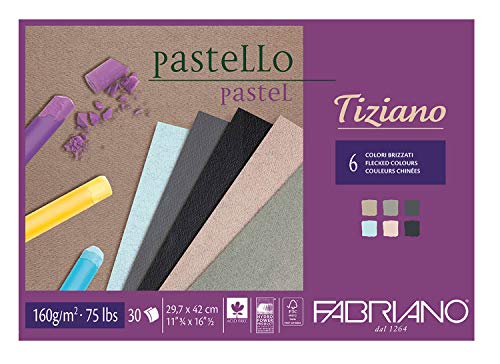
The 40% cotton content gives this paper a sturdy feel that resists aging, and it’s acid-free and pH neutral for long-term stability. That means your artwork won’t yellow or become brittle over time, which is a real plus for archival-minded artists. The six included colors let you start working on a toned surface without having to prepare it yourself, so you can jump straight into building your composition.
This paper is designed for pastel, pencil, gouache, arts chalk, and acrylic techniques, but it doesn’t have a sanded surface like some specialty pastel papers. If you’re used to the heavy tooth of a sanded pad such as the Somime 600gsm paper, the Fabriano will have a different feel and may not hold as many layers before the surface fills. It’s best suited for moderate layering and dry media work, not for heavy impasto or wet techniques that require a more aggressive texture.
This pad is ideal for artists who want a cotton-blend paper in multiple colors for soft pastel and mixed dry media. It’s not designed for heavy layering or wet techniques that would benefit from a sanded surface, so if you need extreme tooth for thick applications, consider a sanded alternative.
MEEDEN Oil Pastel Paper Pad
What We Like
- Embedded oil-resistant tracing paper prevents bleed-through
- Fine texture holds pastels without slipping
- Spiral binding lays flat for double-page spreads
- DIY blank cover for personalization
Trade-offs
- Only one size offered in this pad
- Fine texture lacks aggressive grab of sanded papers
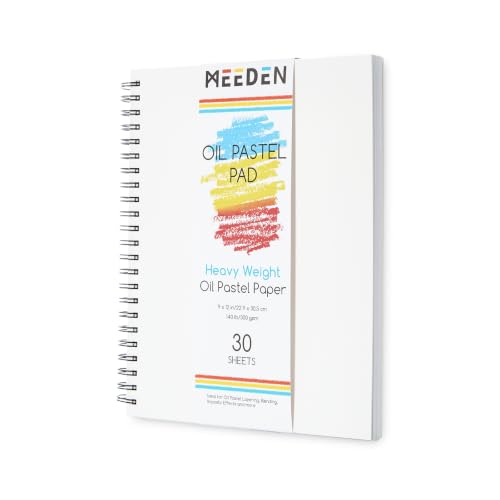
The embedded oil-resistant tracing paper is the standout feature here: it structurally blocks oil and water penetration, preventing color bleeding or fading when stacking multiple artworks. This 140lb/300gsm pad is a practical choice for artists who work in layers or store work in the pad over time, especially with oil pastels where grease migration is a common headache. The fine, fabric-like texture gives pastels enough grip to stay put while still letting colors glide smoothly, and the acid-free paper resists aging and yellowing, keeping works looking new for years.
At 2.2 pounds for 30 sheets, this pad is heavier than the Winsor & Newton Professional Pastel Paper Pad (0.9 lb for 24 sheets), so it’s less convenient for carrying in a backpack for outdoor sketching. The fine texture won’t appeal to artists who want the strong grip of a sanded surface like the Somime Sanded Pastel Paper Pad. But if you need oil pastel work that stays clean, layered, and archival with no bleed-through, the MEEDEN pad offers a solution that other papers here don’t match.
Product photos
MAIMOUFIN Sanded Pastel Paper Pad

What We Like
- Holds up to 9 pastel layers
- High-weight board resists warping
- Works with wet or dry underpainting
- Portable with built-in backing board
Trade-offs
- Only 12 sheets per pad
- Glue-bound, not tear-out or spiral
Holding up to nine layers of pastel means you can build rich color without the paper losing its grip. The heavyweight substrate board resists warping when you use wet underpainting or alcohol-based mediums, so the pad stays flat through multiple techniques. This pad works with stick pastels, soft pastels, pastel pencils, acrylic oil pastels, and more, making it a versatile surface for artists who switch between dry and wet media. The three-color sets, black, blue, brown or red, grey, warm brown, offer variety within each pad, and the thick backing board can also serve as a drawing board.
Sheet count is the trade-off here. Twelve pages go fast if you layer heavily or make multiple studies, and the glue-bound binding means you cannot remove a sheet without tearing the edge. For comparison, the Winsor & Newton Professional Pastel Paper Pad offers 24 sheets at a lighter 160gsm weight, which some artists may prefer for a different feel or more pages. If you want a rigid surface that handles wet techniques and holds many layers, the MAIMOUFIN pad delivers that. If you need more sheets per pad, the Winsor & Newton gives you double the pages.
Product photos
MAIMOUFIN Archival Sanded Pastel Boards
What We Like
- 500 grit holds many pastel layers
- Warp-resistant for wet underpainting
- Works with acrylic, alcohol, oil
Trade-offs
- Only 5 sheets per pack
- Brown tint limits color versatility
A 500-grit surface on a rigid substrate means this board can handle many layers of pastel and wet underpainting without warping. The high-weight substrate resists curling from acrylic, alcohol, or oil, so you can build rich textures without worrying about the surface lifting. It’s a stable, archival support for mixed-media pastel work, especially when you need to combine wet and dry layers in one piece.
Five sheets is a small pack, so you’ll burn through them fast if you’re a frequent sketcher or working on a series. The heavyweight substrate prevents warping in wet conditions, which makes it a good pick when you need a tough surface for wet media like acrylic or alcohol. The brown color suits earth-tone subjects well, but you only get one background shade.
Product photos
How We Evaluated Papers For Pastels
Our evaluation is research-based, drawing on manufacturer documentation, expert recommendations from art educators, and common feedback from pastel artists. We focused on the technical specifications that matter most for pastel work: surface texture, paper weight, and archival properties.
The three criteria that mattered most were surface grip (the paper’s ability to hold pastel layers without slipping), weight and rigidity (resistance to buckling with wet media), and archival quality (acid-free and pH-neutral construction). We also considered sheet count, color variety, and compatibility with different pastel types (soft, hard, and oil).
By comparing specifications and owner experiences across a wide range of products, we identified which papers consistently meet the demands of pastel artists.
What To Look For In Papers For Pastels
Choosing the right pastel paper means matching the surface to your technique. The key factors are tooth, weight, and archival quality.
Look for a surface with enough tooth to grip pastel pigment, a weight of at least 160 gsm to resist buckling, and acid-free construction for artwork longevity. Sanded papers hold more layers, while smoother papers work better for fine detail.
Surface Texture and Tooth
The tooth of pastel paper determines how much pigment it can hold. Sanded papers, like the Somime Sanded Pastel Paper Pad at 600gsm, have an abrasive surface that grips multiple layers without slipping. Velvet and grained surfaces, such as on the Canson Mi-Teintes, offer a smoother feel that works well for blending and detail work. Cork-vegetable surfaces, like the Sennelier La Carte, provide a unique texture that holds dry pastel firmly.
- For heavy layering, choose a sanded surface (600 gsm or higher).
- For blending and detail, a velvet or grained surface is ideal.
- For dry techniques only, a cork-vegetable surface offers excellent grip.
Paper Weight and Rigidity
Paper weight affects how well the surface handles wet underpainting and heavy layering without buckling. Lightweight papers (around 160 gsm) are portable but may warp with wet media. Heavyweight papers (200 lb. Or 430 gsm and above) and rigid boards like the Ampersand Museum Series Pastelbord resist warping and support wet techniques.
A rule of thumb: if you use wet underpainting, choose a paper of at least 300 gsm or a rigid board.
Archival Quality and Color Options
Archival, acid-free paper ensures your artwork won’t yellow or deteriorate over time. Papers like the Winsor & Newton Professional Pastel Paper Pad and the Fabriano Tiziano offer acid-free construction. Color variety is also important. Some artists prefer a range of colored backgrounds (like the Fabriano Tiziano’s six vivid colors), while others work best on neutral greys (like the Canson Mi-Teintes and Winsor & Newton pads).
- Check for “acid-free” and “pH neutral” labels.
- Consider whether you need a colored background or a neutral tone.
- For oil pastels, look for oil-resistant paper like the MEEDEN pad.
Papers For Pastels Compared
The table below compares the key specifications of our top picks to help you see the differences at a glance.
| Product | Sheets | Size | Surface |
|---|---|---|---|
| Canson Mi-Teintes Velvet Pastel Paper Pad | 12 | 9.4 x 12.6 in | Velvet texture |
| Somime Sanded Pastel Paper Pad 600gsm | 12 | 9×12 inches | Sanded / abrasive |
| Ampersand Museum Series Pastelbord | 4 panels | 5 x 7 inches | Granular marble dust finish |
| Winsor & Newton Professional Pastel Paper Pad | 24 sheets | 9" x 12" | Grained on one side, smooth on other |
| Sennelier La Carte Pastel Pad | N/A | 9.5 x 12.8 x 0.5 inches | Cork and vegetable flakes |
| Fabriano Tiziano Pastel Paper Pad | 30 sheets | A3 (16.5 x 11.7 in) | N/A |
| MEEDEN Oil Pastel Paper Pad | 30 | 9" x 12" | Fine textured, fabric-like tooth |
| MAIMOUFIN Sanded Pastel Paper Pad | 12 | 9 x 12 inches | Sanded |
| MAIMOUFIN Archival Sanded Pastel Boards | 5 sheets | 15.4 x 10.7 inches | 500 grit |
Frequently Asked Questions
What is the best paper for soft pastels?
The Canson Mi-Teintes Velvet Pastel Paper Pad is a top choice for soft pastels because its velvet surface allows for smooth layering and blending without the need for fixative. For artists who want to build many layers, a sanded paper like the Somime Sanded Pastel Paper Pad provides more grip.
Can I use pastel paper for wet underpainting?
Yes, but you need a heavyweight paper or rigid board that resists buckling. The Ampersand Museum Series Pastelbord and the MAIMOUFIN Archival Sanded Pastel Boards are specifically designed to handle wet underpainting with acrylic, alcohol, or oil.
What is the difference between sanded and velvet pastel paper?
Sanded paper has an abrasive surface that grips pastel pigment firmly, allowing for many layers and wet techniques. Velvet paper has a smoother, fibrous surface that is better for blending and fine detail but holds fewer layers. Choose sanded for heavy layering, velvet for blending.
How many sheets come in a typical pastel paper pad?
Most pastel paper pads contain between 12 and 30 sheets. The Winsor & Newton Professional Pastel Paper Pad offers 24 sheets, while the Fabriano Tiziano Pastel Paper Pad includes 30 sheets. Sanded paper pads often have fewer sheets due to their heavier weight.
Is pastel paper acid-free?
Not all pastel paper is acid-free, but many premium options are. The Winsor & Newton Professional Pastel Paper Pad, the Sennelier La Carte Pastel Pad, and the Fabriano Tiziano Pastel Paper Pad are all acid-free and pH neutral, ensuring your artwork lasts.
The Bottom Line
The Canson Mi-Teintes Velvet Pastel Paper Pad is our Best Overall pick for artists who want a versatile, archival surface that handles soft pastels, layering, and wet techniques with ease. Its velvet texture eliminates the need for fixative, making it a practical choice for studio and plein air work alike.
For artists who build many layers or use wet underpainting, the Somime Sanded Pastel Paper Pad offers a heavyweight sanded surface at a budget-friendly price. The Ampersand Museum Series Pastelbord provides a rigid panel for the most demanding techniques. Those who prioritize archival quality should consider the Winsor & Newton Professional Pastel Paper Pad.
The single most important factor in choosing pastel paper is matching the surface tooth to your layering needs. A paper that grips your technique will make every stroke count.
