
10 Best Automotive Primers in 2026
This post contains affiliate links. As an Amazon Associate, we earn from qualifying purchases.
For a durable, professional-looking paint job, the right automotive primer is non-negotiable. The Rust-Oleum Self Etching Primer Spray is our best overall pick for DIYers, offering a fast-drying, single-step solution that etches and primes bare metal in one go. For professionals seeking maximum adhesion, the SprayMax 2K Epoxy Primer delivers superior corrosion resistance, while those tackling large panels will appreciate the high-build coverage of the U-POL High Build Urethane Primer Kit.
The challenge with automotive primers isn’t just finding one that sticks, it’s matching the primer type to your specific substrate and repair. Bare metal, fiberglass, and old paint each require different chemistry for proper adhesion and corrosion protection. A self-etching primer that works perfectly on steel won’t perform the same over body filler.
This guide is built from manufacturer specifications, expert recommendations, and patterns in owner feedback across dozens of primers. We evaluated each product on adhesion strength, build capability, drying time, and ease of application to help you choose with confidence.
Top 10 Automotive Primers in the Market
Certain content that appears on this site comes from Amazon. This content is provided "as is" and is subject to change or removal at any time.
The Best Automotive Primers, Reviewed
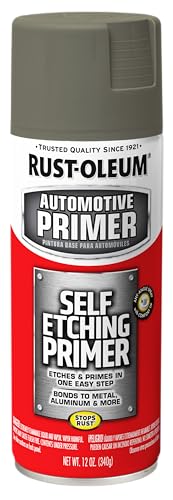
Rust-Oleum Self Etching Primer Spray
What We Like
- Etches and primes in one step
- Dries to touch in 10 minutes
- Sprays upside down with any-angle tech
- Stops Rust formula prevents corrosion
Trade-offs
- Limited to 12 sq ft per can
- Requires a well-ventilated area for safe use
A self-etching primer that preps bare metal, aluminum, and fiberglass in a single pass, this Rust-Oleum spray dries to the touch in just 10 minutes and accepts topcoat after only 30. That fast turnaround matters when you’re working through a multi-panel job or squeezing a repair into an afternoon. The any-angle spray technology lets you hit tight wheel wells, frame rails, and awkward corners without tilting the can or wasting product, which keeps the coat even where gravity fights you. For someone tackling a car, truck, or fiberglass project at home, this is the kind of primer that simplifies the process without cutting corners on adhesion or rust protection.
This self-etching primer covers up to 12 square feet per can, so you’ll need multiple cans for a full body panel or larger job. Unlike the SprayMax 2K Epoxy Primer Gray, which requires mixing two components, this Rust-Oleum is a single-step spray that goes on straight from the can. That makes it simpler for home users who want to skip the measuring and mixing.
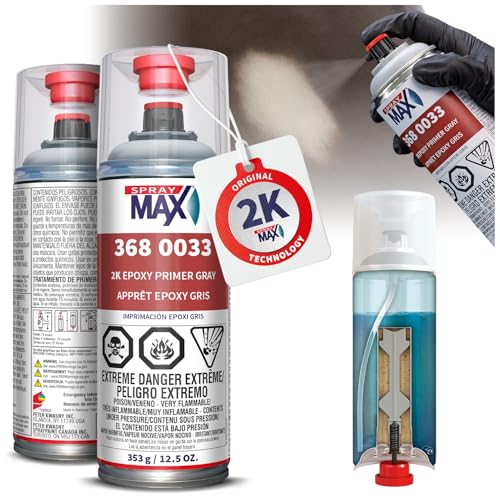
SprayMax 2K Epoxy Primer Gray
What We Like
- Superior corrosion resistance on metals
- Dust-dry in 15 minutes
- Variable nozzle for precise control
- Professional-grade 2K bonding strength
Trade-offs
- Single-use can after activation (limited pot life)
- Requires activation step before spraying
A 15-minute dust-dry time means you can move from primer to sanding within hours, which keeps a restoration or repair project moving without long waits. This 2K epoxy system delivers adhesion and corrosion protection on steel, aluminum, and galvanized metal surfaces where rust is a real threat. The aerosol format gives you professional-grade chemistry without needing a compressor or spray gun, making it a strong fit for repair shops and DIY automotive applications.
The trade-off is that this is a 2K system that requires activation before use, so you need to plan your project accordingly. That works fine for smaller jobs, but for larger areas you might find yourself reaching for a larger kit like the U-POL High Build Urethane Primer Kit instead. Still, for a project where you need a tough, sandable foundation fast and don’t want to mix and spray from a gun, this is a professional option in a can.
U-POL High Build Urethane Primer Kit

What We Like
- High solids for thick film build
- Excellent opacity and hiding power
- Self-leveling for smooth finish
- Multiple cure options: air, bake, IR
Trade-offs
- Heavy 15 lb kit is less portable than spray cans
- Requires mixing before each use
A full gallon of high-solids urethane primer means you can lay down a thick, level coat that fills minor imperfections in a single pass. The 4:1 mixing ratio is straightforward, and the low-VOC formulation keeps fumes manageable. This kit suits anyone working on a full panel or multi-panel project where hiding power and a smooth sandable surface matter more than speed. The high-build formula excels at covering sanding scratches and providing a uniform base for topcoat.
At 15 pounds, this gallon kit is a stationary shop tool, not something you grab for a quick touch-up. Compared to the SprayMax 2K Epoxy Primer, which weighs 0.9 pounds, the U-POL requires mixing and a spray gun. If you are coating a hood, door, or entire project and want the thickest fill without multiple coats, this kit delivers a large volume of material for the job.
Product photos
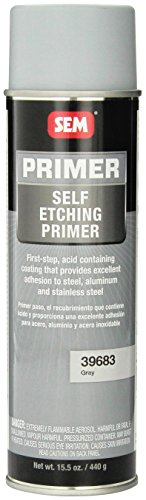
SEM Grey Self Etching Primer
What We Like
- Self-etching formula for bare metal adhesion
- Convenient aerosol spray application
- Made in the United States
Trade-offs
- 15.5 oz can covers less area than larger kits
- Single-stage formula lacks high-build filling ability
The SEM Grey Self Etching Primer is a 15.5 oz aerosol can of self-etching primer made in the United States. It applies as a grey primer designed for automotive use, so it is a straightforward option for prepping metal surfaces before painting. The aerosol format keeps application simple, spray directly from the can, which suits small projects where convenience matters. However, because it is a self-etching primer rather than a high-build filler, it will not level deep scratches or dents; you would need a separate primer-surfacer for that.
The most decisive fact about this primer is that it is formulated for etching, not for filling. By contrast, the U-POL High Build Urethane Primer Kit is a 1-gallon kit that requires a spray gun and mixing, so it is better suited for larger jobs that need filling. The SEM comes in a 15.5 oz. aerosol can, so it is ready to spray without any mixing or extra equipment.
Restoration Shop 2K High Build Primer Kit

What We Like
- High solids content fills deep scratches
- Direct-to-metal adhesion on bare metal
- Fast drying, sands easily wet or dry
- Can be tinted with primer tints
Trade-offs
- Requires mixing hardener before use
- Not a spray can; needs spray equipment
The 4:1 mix ratio yields 1.25 quarts of sprayable high-solids primer, which is formulated to fill medium to deep sand scratches. This kit is a practical size for bodywork on a car or truck, giving you professional filling capability without committing to a larger volume. The direct-to-metal formulation adheres to properly prepared bare metal, previously painted surfaces, body filler, and most properly prepared automotive plastics, so it covers multiple repair stages with one product.
Mixing the hardener yourself is the trade-off for getting a high-build urethane primer that sands easily wet or dry without loading the paper. The kit includes 1 quart of white primer surfacer and a 1/2 pint of hardener that combine at a 4:1 mix ratio to yield 1.25 quarts of sprayable material. Follow the mixing instructions and use proper application equipment to get a professional finish.
U-POL DTM Urethane Primer Filler

What We Like
- Direct-to-metal application saves prep time
- Excellent film build fills minor imperfections
- High-build formula levels well for smooth finish
- 2K urethane provides durable, professional-grade adhesion
Trade-offs
- Requires mixing before use (2K system)
- Heavier than spray cans at 12.3 pounds
- Needs spray equipment for application
A full gallon of 2K urethane primer that goes straight onto bare metal means you can skip an etching step entirely. The high-build formula provides excellent film build and surface leveling, so it helps create a smooth foundation for your topcoat. For anyone restoring a panel or refinishing a whole car, this primer offers professional-grade adhesion and filling in one product.
At over twelve pounds, this gallon of primer is far heavier than a spray-can primer like the SprayMax 2K Epoxy Primer Gray, which weighs 0.9 pounds, so it’s built for serious panel work rather than quick touch-ups. The trade-off is that it’s a two-part system, so you have to mix it and use it within the pot life, which adds a little urgency to your workflow. But if you’re already set up for spraying and want a direct-to-metal primer that builds fast and sands smooth, this gallon gives you the coverage to handle multiple panels in one session.
Rust-Oleum Filler & Sandable Spray Primer

What We Like
- Fills minor surface imperfections
- Sands smooth for a flat finish
- Dries and can be recoated in 10 minutes
- Rust-preventive base coat for vehicles
Trade-offs
- Limited to 10 sq ft coverage per can
- Oil-based formula requires solvent cleanup
- Only for minor imperfections, not deep dents
A 10-minute dry time means you can move from primer to sanding to top coat in a single afternoon, which is exactly what you want when prepping a car panel or a piece of furniture. This Rust-Oleum spray fills light scratches and small pits as it lays down a flat, sandable surface, and its Stops Rust formula gives metal parts a protective base that resists corrosion. For anyone working on a mix of wood, metal, or fiberglass, especially on smaller projects like a fender, a toolbox, or a cabinet door, this primer simplifies the prep step. It does not demand a spray gun or a mixing cup.
The trade-off is coverage: at 10 square feet per can, you will need multiple cans for a full car or a large piece of furniture, and the oil-based formula means you will need mineral spirits for cleanup rather than soap and water. This Rust-Oleum filler primer is a convenient, quick-turnaround option for hobbyists and DIYers who value speed and ease. It works well when your goal is to fill light flaws and get a smooth base fast.
Product photos
Dupli-Color Paint Shop Primer

What We Like
- No hardener or reducer required
- Dries to touch in 1 hour
- No re-coat window for timing
- Designed for automotive and motorcycle use
Trade-offs
- 32 oz can is heavy for handheld spraying
- Lacquer base lacks the chemical resistance of two-part urethane primers
A ready-to-spray primer that needs no hardener or reducer means you can open the can and start working without mixing ratios or worrying about pot life. It dries to the touch in an hour and has no re-coat window, so you can add another coat whenever you want without sanding between layers. This makes it a natural fit for someone tackling a weekend restoration in a home garage, where speed and simplicity matter more than a show-car finish. The Paint Shop Finish System is designed for vehicle refinish applications, and reviewers note it creates a fast-drying, durable finish.
The Dupli-Color Paint Shop Primer is a lacquer-based system, which means it dries to the touch in one hour and can be handled in three hours. That is fast enough to keep a project moving without waiting days between coats. Unlike two-part urethane kits that require a hardener and have a limited working time, this ready-to-spray primer needs no hardener or reducer, and there is no re-coat window, so you can add another coat whenever it’s convenient. Reviewers note that for a garage-kept car or a motorcycle restoration, the forgiving application and quick drying make this a practical choice that doesn’t demand professional spray equipment.
Product photos
LiME LiNE Sand-able Automotive Primer Surfacer

What We Like
- Exceptional weather and corrosion resistance
- Direct-to-metal application saves a step
- High-build formula fills minor imperfections
Trade-offs
- Requires mixing 4:1 before use
- 2K urethane needs proper ventilation and PPE
A 2K urethane primer that goes directly onto bare metal means you skip the separate etching step, saving time and reducing the chance of adhesion failure. Its high-build formula fills light scratches and sanding marks in fewer coats, which is exactly what you want when prepping a panel for a long-lasting paint job. The weather and corrosion resistance listed for this primer makes it suitable for vehicles exposed to the elements.
The 4:1 mix ratio with a limited working window means you need to plan ahead and work fast, unlike a single-component aerosol primer. This two-part system demands more effort upfront, but the payoff is a sandable foundation with exceptional weather and corrosion resistance.
Product photos
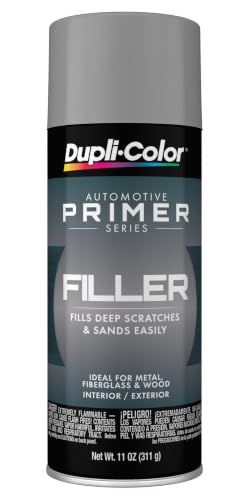
Dupli-Color Multi-Purpose Filler Primer
What We Like
- Fills deep scratches and minor imperfections
- High build formula for thick coverage
- Easy sanding properties save time
- Improves top coat adhesion
Trade-offs
- Flat gray finish requires a color coat over it
- Not a self-etching or anti-corrosion primer
The high build formula of this Dupli-Color primer fills deep scratches and minor imperfections, and its easy sanding properties help you smooth the surface without extra effort. That makes it a practical choice for repairing surface damage on car panels or bumpers before painting, as it reduces the need for repeated sand-and-fill steps.
This primer is built to fill deep scratches and minor imperfections, so it’s the right choice when your main goal is smoothing out a rough surface before paint. Unlike the Rust-Oleum Self Etching Primer, which etches and primes in one step, this Dupli-Color can focuses on filling and building up the surface. That means if you’re working on bare metal, you’ll need a separate etching step first, but for already-prepped panels or plastic, it saves you sanding time.
Product photos
How We Evaluated Automotive Primers
Our evaluation is research-based, drawing from manufacturer technical data sheets, professional automotive paint forums, and aggregated owner feedback. We analyzed how each primer’s chemistry and formulation translate to real-world performance for different repair scenarios.
Four criteria mattered most. First, adhesion method, whether the primer is self-etching, epoxy-based, urethane, or direct-to-metal, determines compatibility with bare metal, aluminum, or painted surfaces. Second, film build (high-build vs. Light) dictates how much surface imperfection filling you get per coat. Third, drying and recoat time affects workflow speed, especially for DIYers without a heated booth. Finally, application method (aerosol vs. Spray gun kit) determines accessibility for different skill levels and project sizes.
A research-led evaluation has honest limits. We cannot measure real-world durability under salt spray or UV exposure, nor can we verify claims about “professional-grade” performance for every user. What we can do is connect the chemistry and formulation to the right job, helping you avoid a primer failure that sends you back to bare metal.
What To Look For In Automotive Primers
Choosing the right automotive primer means understanding the substrate you’re covering and the conditions the repair will face. Here are the key factors to consider before you buy.
Match the primer chemistry to your surface: self-etching for bare metal, epoxy for corrosion resistance, urethane for high-build filling, and direct-to-metal for saving prep steps. Always verify compatibility with your topcoat system.
Primer Chemistry and Adhesion
The primer’s chemical family dictates how it bonds. Self-etching primers contain acid that etches bare metal for mechanical adhesion while depositing a protective zinc phosphate layer. They work on steel, aluminum, and fiberglass but don’t fill imperfections well. Epoxy primers offer the best corrosion resistance and adhesion to clean metal, but they require a topcoat within a specific window. Urethane primers (2K) provide excellent build and sandability, ideal for filling scratches and pinholes. Direct-to-metal (DTM) primers save a step by bonding directly to bare metal without a separate etch coat. However, they may not offer the same corrosion protection as a dedicated etch primer.
Build and Filling Capability
High-build primers contain high solids content that fills sand scratches, minor pitting, and orange peel in fewer coats. They are formulated to be sanded flat after curing. Filler primers sit between a high-build and a light primer, designed to fill shallow imperfections but not deep dents. If you’re repairing deep scratches or sand-throughs, a high-build urethane like the U-POL High Build Urethane Primer Kit will save you time. For light surface prep, a filler primer like the Rust-Oleum Filler & Sandable Spray Primer is sufficient.
Drying Time and Recoat Windows
Fast-drying primers (10–15 minutes to touch) are convenient for small repairs but may not allow enough leveling time for large panels. Slower-curing 2K urethanes require 30 minutes to an hour between coats but offer a longer open time for self-leveling. Always check the recoat window: some epoxies require topcoating within a day, while urethanes can be sanded and painted after a full cure. For DIYers without a spray booth, a primer that dries dust-free quickly reduces contamination risk.
Application Method and Equipment
- Aerosol cans offer convenience for small repairs (under 2 square feet) but limited coverage per can. They require no cleanup beyond the nozzle.
- 2K aerosol cans (like SprayMax) have an internal activator that you press before use. They give professional-grade adhesion without a spray gun but have a limited pot life after activation.
- Spray gun kits (like the U-POL and Restoration Shop) require a compressor, gun, and mixing cups. They offer the best coverage for full panels or entire vehicles but demand more setup and cleanup.
- Check that the primer is compatible with your spray equipment’s tip size (typically a few millimeters for primers).
For small repairs, an aerosol self-etching or filler primer is the most practical choice. For full panels or bare-metal restorations, invest in a 2K kit and spray equipment for professional results.
Automotive Primers Compared
The table below compares all ten automotive primers side-by-side, highlighting their chemistry, best use case, and surface compatibility.
| Product | Type | Surface Compatibility | Dry Time |
|---|---|---|---|
| Rust-Oleum Self Etching Primer Spray | Self-etching primer | Bare metal, aluminum, fiberglass | 10 minutes |
| SprayMax 2K Epoxy Primer Gray | 2K Epoxy Primer | Metal, Aluminum, Steel | 15 min |
| U-POL High Build Urethane Primer Kit | Urethane Primer | N/A | N/A |
| SEM Grey Self Etching Primer | Self-etching primer | N/A | N/A |
| Restoration Shop 2K High Build Primer Kit | 2K urethane primer surfacer | Direct-to-metal, filler, plastics | N/A |
| U-POL DTM Urethane Primer Filler | Urethane Primer Filler | Direct to bare metal | N/A |
| Rust-Oleum Filler & Sandable Spray Primer | Filler and sandable primer | Wood, metal, fiberglass | 10 minutes |
| Dupli-Color Paint Shop Primer | Lacquer-based primer | N/A | 1 hour |
| LiME LiNE Sand-able Automotive Primer Surfacer | 2K Urethane | Direct-to-Metal | N/A |
| Dupli-Color Multi-Purpose Filler Primer | High build | N/A | N/A |
Frequently Asked Questions
Can I use automotive primer over existing paint?
Yes, but surface preparation is critical. The existing paint must be scuffed with fine-grit sandpaper to create a mechanical bond, then thoroughly cleaned of wax and grease. Some primers, like direct-to-metal formulas, are designed for bare metal and may not adhere well to cured paint. Always check the primer’s label for “over existing paint” compatibility.
What is the difference between self-etching and epoxy primer?
Self-etching primer uses acid to chemically etch bare metal for adhesion while providing light corrosion resistance. Epoxy primer forms a tough, moisture-resistant barrier that offers superior corrosion protection but relies on mechanical adhesion to a properly abraded surface. Self-etching is best for bare metal in one step; epoxy is better for long-term protection, especially in wet or salty environments.
Do I need to sand primer before painting?
Yes, for a smooth final finish. Even self-leveling primers benefit from a light sanding with fine-grit wet/dry paper to remove any orange peel, dust nibs, or overspray texture. Sanding also promotes mechanical adhesion for the topcoat. High-build primers are specifically designed to be sanded flat after curing.
How many coats of primer do I need for bare metal?
Typically two to three medium-wet coats. The first coat should be a light tack coat to ensure adhesion, followed by one or two full coats for coverage and fill. For high-build primers, one thick coat may be sufficient for minor imperfections, but two thinner coats usually level better and reduce the risk of runs.
Can I use automotive primer on plastic or fiberglass?
Yes, but you need the right type. Self-etching primers work on fiberglass and some plastics, but many plastics require a specialized flexible primer or adhesion promoter first. For fiberglass, a self-etching or epoxy primer is appropriate after thorough sanding and cleaning. Always test on a hidden area first to check for chemical reaction or adhesion failure.
The Bottom Line
For most DIYers and home mechanics, the Rust-Oleum Self Etching Primer Spray is the best overall choice. It combines etching and priming in one fast-drying step, making it ideal for small to medium repairs on bare metal, aluminum, or fiberglass. The 10-minute dry time and any-angle spray tech keep the job moving without a spray booth.
If your project demands professional-grade corrosion resistance or you’re painting a classic car that will face the elements, step up to the SprayMax 2K Epoxy Primer. For budget-conscious restorers tackling large panels, the Restoration Shop 2K High Build Primer Kit offers excellent fill and sandability at a strong value. And if you simply want a no-mix, no-fuss option for light repairs, the Dupli-Color Paint Shop Primer is the most DIY-friendly pick.
The single most important factor in a successful paint job is surface preparation. No primer can fix poor sanding, inadequate cleaning, or incompatible chemistry. Choose the primer that matches your substrate and repair size, and your topcoat will reward you with a finish that lasts.
