
4 Best Antifouling Paint For Aluminum Boats in 2026
This post contains affiliate links. As an Amazon Associate, we earn from qualifying purchases.
The best antifouling paint for aluminum boats is TotalBoat AlumiPaint AF Antifouling Paint, a copper-free ablative formula that protects bare aluminum without causing galvanic corrosion. For boat owners who want a self-polishing option with flexible launch timing, the TotalBoat Krypton Copper-Free is a top choice, while the Interlux Trilux 33 excels on primed surfaces.
Aluminum hulls, pontoons, and outdrives require special care because copper-based antifouling paints can cause rapid galvanic corrosion. The right paint must be copper-free and compatible with aluminum to prevent damage while still protecting against barnacles, slime, and algae.
This guide is based on manufacturer specifications, expert recommendations, and patterns found in owner feedback. We evaluated each paint for aluminum safety, antifouling performance, application requirements, and overall value to help you choose with confidence.
Top 4 Antifouling Paints For Aluminum Boats in the Market
Certain content that appears on this site comes from Amazon. This content is provided "as is" and is subject to change or removal at any time.
The Best Antifouling Paints For Aluminum Boats, Reviewed
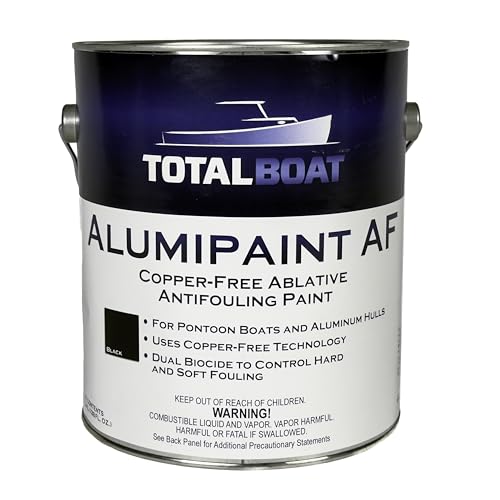
TotalBoat AlumiPaint AF Antifouling Paint
What We Like
- Copper-free for aluminum hulls
- Ablative action reduces paint buildup
- Flexible launch timing
- Compatible with most existing paints
Trade-offs
- Requires 1-2 thin coats for full season
- Thinner needed for spray application
- Only two color options available
A copper-free formula with an organic biocide paired with zinc means this paint is built from the ground up for aluminum boats, where copper-based antifoulants cause galvanic corrosion. The ablative design wears away gradually as you move through the water, continuously exposing fresh biocide and preventing the heavy buildup that plagues hard paints. Coverage is 500 square feet per gallon, and it dries in as little as one hour, so it suits both DIY owners prepping a pontoon in a weekend and pros painting multiple hulls ahead of the season.
The copper-free formula pairs an organic biocide with zinc to repel growth on aluminum hulls and pontoons, delivering full-season protection against barnacles, slime, algae, and weeds. It gradually wears away as the boat moves, continuously exposing fresh biocide and reducing paint build-up. That extra step of using thinner and applying one to two thin coats buys you a formula specifically designed for underwater metals and outdrives, not a general-purpose paint adapted for aluminum.
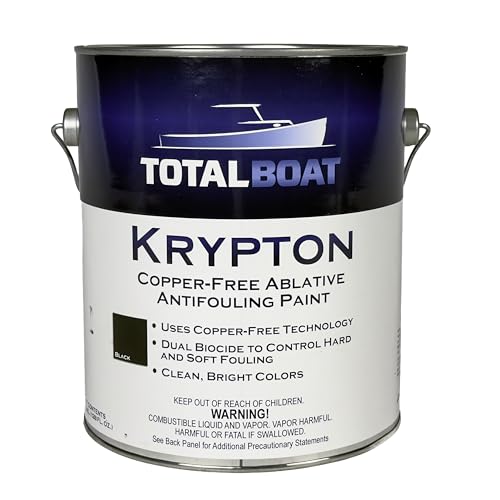
TotalBoat Krypton Copper-Free Antifouling Paint
What We Like
- Safe for aluminum hulls and outdrives
- Self-polishing ablative reduces paint buildup
- No maximum dry time for flexible launch
- Works over most existing bottom paints
Trade-offs
- Requires primer on bare surfaces (sold separately)
- Thinner needed for spraying (not included)
- Only five color options available
A dual-biocide ablative formula that is completely copper-free means this paint protects aluminum boats without the galvanic corrosion risk that copper-based paints bring. It covers 500 square feet per gallon, dries in as little as one hour, and has no maximum dry time so you can paint weeks ahead and launch when it suits you. That flexibility, combined with compatibility over most existing bottom paints, makes it a straightforward choice for DIY boat owners who want full-season antifouling protection on aluminum, fiberglass, wood, or steel hulls.
The trade-off is that bare aluminum surfaces will need a separate primer like TotalProtect, and if you plan to spray, you will need to buy Brushing Thinner 100 or Spray Thinner 101 separately. For anyone with an aluminum boat who wants reliable antifouling without worrying about copper damage, this paint delivers exactly what the label promises.
Interlux Trilux 33 Antifouling Paint

What We Like
- Biolux technology blocks slime
- Works on primed aluminum
- Suitable for multiple hull materials
Trade-offs
- Requires aluminum to be primed first
- Only available in white
The Biolux slime-blocking technology built into this paint is its standout feature, giving boat owners a targeted defense against the biofilm that often leads to heavier fouling. Just remember that this paint is formulated for primed aluminum, so if your hull is bare metal, you will need to apply a compatible primer before rolling on the Trilux 33.
The key decision with this paint is that it needs a primer coat on bare aluminum, which means more prep work than some alternatives. But if your hull is already primed or you’re okay with that step, the Biolux technology targets slime buildup. It works on fiberglass, wood, steel, and primed aluminum, so you get broad hull compatibility without copper.
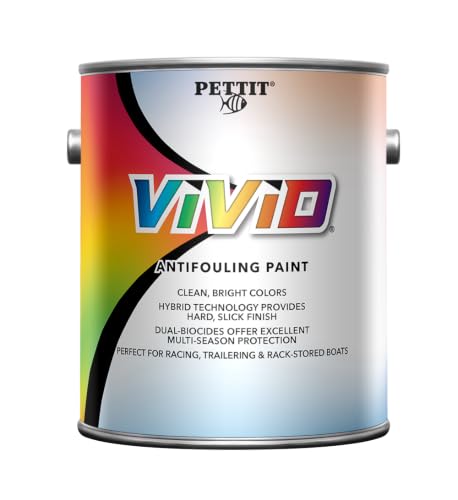
Pettit Vivid Hybrid Dual Biocide Paint
What We Like
- Hybrid hard-ablative reduces paint buildup
- Dual-biocide multi-season protection
- Hard smooth finish resists trailering
- Aluminum safe with proper primer
Trade-offs
- Requires a specific primer system for aluminum
- Heavier than some competing gallon paints at 16.0 pounds
A gallon weighs 16.0 pounds, and the hybrid hard-ablative formula combines the durability of hard bottom paints with the self-renewing advantages of ablative coatings to help reduce paint buildup. The dual-biocide system. Cuprous Thiocyanate and Zinc Pyrithione, provides multi-season protection against barnacles, algae, slime, and other marine growth in a variety of water conditions. The hard, smooth finish withstands trailering, hauling, and relaunching, and can be burnished into a super-slick racing surface for enhanced performance.
The trade-off is that this paint requires a proper primer system for safe use on aluminum hulls and outdrives, which adds a step compared to some other antifouling paints. But if you follow the priming instructions, you get a durable, burnishable racing surface that resists buildup and holds up to trailering and rack storage.
Product photos
How We Evaluated Antifouling Paints For Aluminum Boats
This guide draws on manufacturer data sheets, technical bulletins, and expert round-ups from marine professionals. Patterns in owner feedback were also analyzed to understand real-world application and performance. The evaluation reflects what the specifications and experienced boat owners report.
We focused on four criteria that matter most for aluminum boats. First, copper-free chemistry is non-negotiable, any copper content can cause galvanic corrosion. Second, we looked at ablative versus hard paint types and how each affects paint buildup over multiple seasons. Third, we considered launch timing flexibility, since many boat owners apply paint weeks before the season begins. Finally, we evaluated primer requirements and compatibility with existing paints.
The honest limit of a research-led evaluation is that we cannot verify long-term performance in different water conditions. Owner experiences vary with water temperature, salinity, and boat usage patterns. Use this guide as a starting point and consult a local marine painter for conditions specific to your waters.
What To Look For In Antifouling Paints For Aluminum Boats
Choosing the right antifouling paint for aluminum means understanding how your hull material interacts with the paint chemistry. The wrong choice can damage your boat.
Look for copper-free paints labeled for aluminum. Check the paint type (ablative vs. Hard), launch timing flexibility, and whether a separate primer is required for bare aluminum.
Copper-Free Chemistry
Aluminum reacts badly with copper. If you apply a copper-based antifouling paint to an aluminum hull, you risk galvanic corrosion that can pit and weaken the metal. Every paint in this guide is copper-free, but always double-check the label. Some paints that claim to be “safe for aluminum” still contain small amounts of copper, so look for explicit “copper-free” wording.
Paint Type: Ablative vs. Hard
Ablative paints wear away slowly as the boat moves through water, exposing fresh biocide and reducing paint buildup over time. This is ideal for boats that are used regularly. Hard paints create a durable, smooth finish that resists trailering and rack storage, but they can build up if reapplied season after season. Hybrid paints combine both properties. Your choice depends on whether you trailer your boat or keep it in the water all season.
Launch Timing and Application
Some paints require launching within a specific window after application, while others have no maximum dry time. If you like to paint your boat weeks before launch day, look for a formula with flexible launch timing. Also consider whether the paint requires thinning for spray application and whether a separate primer is needed for bare aluminum.
- Confirm the paint is explicitly labeled “copper-free” and “safe for aluminum.”
- Check if a primer is required for bare aluminum or if the paint can go directly on the metal.
- Decide between ablative (good for frequent use) and hard (good for trailering) based on how you use your boat.
- Look at the color options available, some paints only come in white or limited colors.
A general rule: if you are painting bare aluminum for the first time, plan to use a dedicated primer system unless the paint explicitly states it can be applied directly.
Antifouling Paints For Aluminum Boats Compared
The table below compares the four top antifouling paints for aluminum boats side by side, highlighting their key differences in paint type, color options, and primer requirements.
| Product | Type | Biocide | Coverage |
|---|---|---|---|
| TotalBoat AlumiPaint AF Antifouling Paint | Copper-free ablative | Organic biocide + zinc | 500 sq. ft. per gallon |
| TotalBoat Krypton Copper-Free Antifouling Paint | Dual biocide ablative | Dual biocide ablative | 500 sq. ft. per gallon |
| Interlux Trilux 33 Antifouling Paint | N/A | Biolux slime-blocking | N/A |
| Pettit Vivid Hybrid Dual Biocide Paint | Hybrid Hard-Ablative | Cuprous Thiocyanate, Zinc Pyrithione | N/A |
Frequently Asked Questions
Can I use regular antifouling paint on an aluminum boat?
No. Most standard antifouling paints contain copper, which causes galvanic corrosion on aluminum. You must use a copper-free paint specifically formulated for aluminum hulls, outdrives, or pontoons.
Do I need to prime aluminum before applying antifouling paint?
It depends on the paint. Some copper-free paints, like TotalBoat AlumiPaint AF, can go directly on bare aluminum. Others, such as Interlux Trilux 33 and Pettit Vivid, require a separate primer system for bare aluminum. Always read the manufacturer’s instructions.
How long does antifouling paint last on an aluminum boat?
Most ablative paints last one full season before needing a fresh coat. Hard and hybrid paints may offer multi-season protection, especially if the boat is trailered or stored out of water between uses. Performance depends on water conditions and how often the boat is used.
What is the difference between ablative and hard antifouling paint?
Ablative paint wears away gradually as the boat moves, releasing biocide and preventing heavy paint buildup. Hard paint stays in place and creates a smooth, durable finish that resists trailering and rack storage. Hybrid paints combine both properties.
Can I spray antifouling paint on an aluminum boat?
Yes, many antifouling paints can be sprayed, but they often require thinning with a specific thinner. Check the manufacturer’s instructions for the correct thinner and spray tip size. Roller and brush application is also common.
The Bottom Line
For most aluminum boat owners, the TotalBoat AlumiPaint AF Antifouling Paint is the best overall choice. It is copper-free, goes directly on bare aluminum without a separate primer, and its ablative action reduces paint buildup season after season. It is ideal for pontoons, outdrives, and aluminum hulls where flexibility in launch timing matters.
If you prefer a self-polishing formula with more color options, the TotalBoat Krypton Copper-Free is an excellent alternative. For primed aluminum surfaces where slime resistance is the top priority, the Interlux Trilux 33 delivers with its Biolux technology. And for boat owners who trailer frequently and want a durable, multi-season finish, the Pettit Vivid Hybrid is worth the extra primer step.
The single most important thing to remember is this: never put copper-based paint on aluminum. Stick with copper-free formulas designed for your hull material, and your boat will stay protected and corrosion-free for years.
