
5 Best Paint For Popcorn Ceilings in 2026
This post contains affiliate links. As an Amazon Associate, we earn from qualifying purchases.
For popcorn ceilings, the KILZ Stainblocking Ceiling Paint wins as the best overall because its stainblocking technology and pink-to-white color change make coverage easy to see and trust. The INSL-X Color-Changing Ceiling Paint is a top choice for avoiding missed spots, while the Seymour 20-052 Ceiling Tile Paint is ideal for acoustic tiles.
Painting a textured popcorn ceiling is different from a smooth wall. The bumps and craters hide mistakes in the finish, but they also make it hard to tell where you have painted and where you have not. You need a paint that handles the texture, hides stains, and shows its coverage clearly so you do not leave patchy areas.
This buying guide is based on a thorough review of manufacturer specifications, expert advice on paint chemistry, and patterns in owner feedback for each formula. We evaluated drying time, coverage indicators, stain-blocking ability, and ease of application for textured surfaces. Here is what we found.
Top 5 Paints For Popcorn Ceilings in the Market
Certain content that appears on this site comes from Amazon. This content is provided "as is" and is subject to change or removal at any time.
The Best Paints For Popcorn Ceilings, Reviewed
KILZ Stainblocking Ceiling Paint

What We Like
- Stainblocking technology hides minor stains
- Pink-to-white color change shows coverage
- Spatter-resistant for easy rolling
- Low odor suits any room
Trade-offs
- Heavier than spray-only options at 12.2 lb
- Requires a separate primer for severe stains
A gallon covers 250 to 400 square feet depending on your ceiling’s texture, enough for a typical bedroom or living room ceiling in one can. The stainblocking technology tackles minor water spots and smoke marks, while the pink-to-white color change lets you see exactly where you’ve painted, so you don’t miss a patch on that bumpy popcorn surface. It dries to touch in an hour and accepts a recoat in two, which keeps the job moving fast. For a ceiling paint that doubles as a stain blocker and works with brush, roller, or sprayer, this is the one that handles the most common popcorn-ceiling headaches in a single coat.
The KILZ Stainblocking Ceiling Paint combines stainblocking technology with a pink-to-white color change that shows you where you’ve painted and dries white in under an hour. That built-in stainblocking saves you a priming step on typical ceiling blemishes, unlike the INSL-X Color-Changing Ceiling Paint which lacks that feature. At 12.2 pounds per gallon, it’s heavier than a spray can, but you get far more coverage per dollar and the flexibility to roll or spray as your ceiling demands.
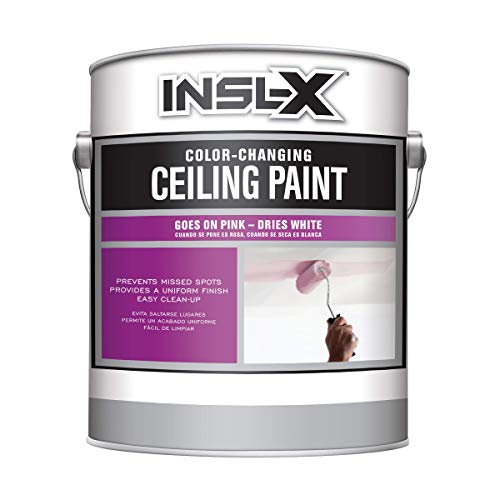
INSL-X Color-Changing Ceiling Paint
What We Like
- Disappearing pink prevents missed spots
- Self-priming for textured ceilings
- Quick drying: recoat in 2 hours
- Flat white hides surface imperfections
Trade-offs
- Requires temperature above 50°F to apply
- Not a stain-blocking formula like some competitors
A disappearing pink color-change technology is the standout feature here, helping you see where you’ve painted so you can avoid missed spots. The paint is self-priming and works on both smooth and textured ceilings, so you can skip an extra primer coat. The flat white finish helps hide minor surface imperfections, which is useful on rough ceilings. This paint is a good choice for anyone who wants an easy way to ensure even coverage without straining to see where they’ve already rolled.
The temperature requirement is above 50°F (10°C) and below 90°F (32°C), so it’s less forgiving for cold garages or winter projects. For a straightforward ceiling refresh where stain blocking isn’t a concern, the color-change guide makes it easy to apply evenly.
Product photos
Seymour 20-052 Ceiling Tile Paint

What We Like
- Water based for low odor
- Designed for overhead spray application
- Fast drying formula
- Works on acoustic and textured tiles
Trade-offs
- Small 1.3 lb can covers limited area
- Spray application requires masking nearby surfaces
A water-based spray formula designed specifically for overhead use means you can touch up stained or discolored acoustic ceiling tiles without the drip and mess of a roller. The fast-drying coating reduces odor, so it’s practical for interior rooms where ventilation is limited. This makes it a natural fit for anyone refreshing acoustic ceiling tiles or textured ceiling panels quickly, especially in smaller areas where a full gallon would be overkill.
The trade-off is the can size. At 1.3 pounds, this spray covers a limited area, so you may need multiple cans for a whole room. The spray application also demands careful masking of walls and fixtures. For a single spot fix on an acoustic tile, this is the faster option. For an entire ceiling, a gallon of paint like the KILZ Stainblocking Ceiling Paint gives you more paint per container and a brush-and-roller approach that avoids overspray.
This spray paint is best for quick touch-ups on stained or discolored acoustic ceiling tiles and textured ceiling panels in small areas. It is not ideal for painting an entire ceiling, where a gallon of ceiling paint would be more economical and require less masking.
Product photos
Zinsser Covers Up Ceiling Paint & Primer Spray

What We Like
- Vertical aerosol for overhead spraying
- Quick cure seals water stains
- Flat white matches most ceiling tiles
- Low odor for interior use
Trade-offs
- 13 oz can covers less area than a gallon
- Spray application requires masking and ventilation
A vertical aerosol design means you can spray overhead without fighting gravity, making this a practical option for spot-treating stains on a ceiling. The quick-cure formula seals water stains fast, and the flat white finish blends with most ceiling textures. For hiding a few problem spots, this spray is a useful tool.
The trade-off is coverage: at 13 ounces, this can is smaller than a gallon of paint, so it’s suited for smaller jobs rather than full-room repaints. The low odor helps for interior use, but spray application still requires some preparation. For targeted stain control, it’s a convenient choice.
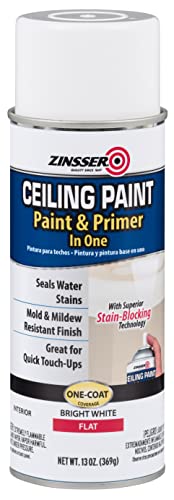
Zinsser Ceiling Acrylic Paint & Primer Spray
What We Like
- Dries to the touch in 30 minutes
- Low-odor formula for indoor use
- One-coat coverage blocks stains
- Mold and mildew resistant finish
Trade-offs
- Small 13 oz can covers only 15 sq. ft.
- Spray application requires careful masking
At 30 minutes to dry, this spray lets you touch up a ceiling and move furniture back in place before lunch. The low-odor formula means you don’t have to air out the room for hours, and the integrated primer blocks water stains or smoke marks in a single coat. That combination makes it a natural fit for quick repairs on interior ceilings where you want speed without sacrificing stain-blocking power. The flat white finish will not yellow over time, so it blends with existing paint.
Coverage is the main trade-off: each 13-ounce can covers up to 15 square feet, so a full ceiling project means buying multiple cans. That makes this spray better suited for spot repairs than whole-room jobs. For larger areas, a gallon of KILZ Stainblocking Ceiling Paint offers a different approach, though you lose the convenience of spray application. If your ceiling has just a few trouble spots, this Zinsser spray is the faster, cleaner route. For a full room, stick with a brush and roller.
Product photos
How We Evaluated Paints For Popcorn Ceilings
We started by studying the specifications and technical data from each manufacturer, focusing on drying times, coverage rates, and chemical composition for textured overhead surfaces. We then cross-referenced those specs with insights from professional painting guides and expert round-ups on ceiling paint performance. Finally, we analyzed the common praise and recurring complaints in owner feedback to understand real-world results.
Our evaluation centered on four key criteria. Coverage visibility mattered most because popcorn texture makes it hard to see where paint has been applied. Stain-blocking ability was critical for ceilings that have water spots or smoke residue. Drying time affected how long a painter had to wait before adding a second coat. Application method determined whether a paint was suited for a roller, a brush, or a spray can.
A research-led evaluation cannot replicate every ceiling texture or stain condition in a home. We rely on documented performance data and the reported experiences of many users rather than a single hands-on test. This approach gives you a reliable framework for choosing a paint that fits your specific ceiling.
What To Look For In Paints For Popcorn Ceilings
Choosing the right paint for a popcorn ceiling means thinking about how the paint covers, hides, and dries on an uneven surface. Here are the most important factors to consider.
Focus on coverage visibility, stain-blocking power, drying speed, and the application method that matches your ceiling size and your comfort level with a spray can.
Coverage Visibility
Popcorn texture makes it easy to miss spots. A color-changing formula that goes on pink and dries white is the most reliable way to see exactly where you have painted. Some paints use a flat white that blends into the ceiling, which can lead to thin patches that show up only after the paint dries.
Stain-Blocking Ability
Water stains from old leaks or smoke residue can bleed through a standard ceiling paint. A dedicated stain-blocking formula seals those marks so they do not reappear. For severe stains, you may need a separate primer before the paint, but many ceiling paints include enough stain-blocking power for minor to moderate marks.
Drying Time And Recoat Window
You often need two coats on a popcorn ceiling because the texture absorbs paint unevenly. A fast-drying paint lets you recoat in two hours or less, which keeps the job moving. Some spray paints dry to the touch in 30 minutes, making them ideal for quick touch-ups.
Application Method And Coverage Area
- Check whether the paint is designed for a roller, a brush, or a spray can.
- Estimate your ceiling area in square feet and compare it to the coverage listed on the can.
- For spray cans, account for the smaller coverage area and the need to mask walls and furniture.
- For roller paints, consider the weight of the can and whether you can manage it overhead.
A roller is best for painting an entire ceiling, while a spray can is better for spot repairs and small areas.
Paints For Popcorn Ceilings Compared
The table below compares the five best paints for popcorn ceilings side by side, so you can see how they stack up on coverage, stain-blocking, and drying time.
| Product | Type | Application | Drying Time |
|---|---|---|---|
| KILZ Stainblocking Ceiling Paint | Water base | Brush, roller, or sprayer | 1 hour to touch |
| INSL-X Color-Changing Ceiling Paint | Acrylic | Smooth or textured ceilings | Recoat in 2 hours |
| Seymour 20-052 Ceiling Tile Paint | Water based | Overhead spray | Fast drying |
| Zinsser Covers Up Ceiling Paint & Primer Spray | N/A | Vertical aerosol | Quick cure |
| Zinsser Ceiling Acrylic Paint & Primer Spray | N/A | N/A | 30 minutes to touch |
Frequently Asked Questions
What kind of paint works best on a popcorn ceiling?
A flat white ceiling paint with a stain-blocking formula and a color-changing feature is the most practical choice. The flat finish hides texture imperfections, the stain-blocking seals old water marks, and the color change shows you where you have painted.
Do I need to prime a popcorn ceiling before painting?
It depends on the condition of your ceiling. If it has severe water stains, smoke damage, or bare drywall, a separate stain-blocking primer is a good idea. For ceilings with only minor stains, a paint that includes stain-blocking technology can handle the job without a separate primer.
How do I paint a popcorn ceiling without making a mess?
Use a thick-nap roller cover designed for textured surfaces, and work in small sections to keep the paint from dripping. Cover your floors and furniture with drop cloths, and wear a hat and safety glasses. For spray applications, mask off walls and light fixtures carefully.
Can I use a spray can to paint an entire popcorn ceiling?
You can, but it is not the most efficient method for a full ceiling. Spray cans cover a small area per can and require extensive masking. They are best for quick touch-ups or for painting a small ceiling in a closet or bathroom.
How long does it take for ceiling paint to dry on a popcorn texture?
Most water-based ceiling paints dry to the touch in one to two hours, though you should wait the full recoat window before applying a second coat. Some spray paints dry in as little as 30 minutes, which makes them good for fast repairs.
The Bottom Line
The KILZ Stainblocking Ceiling Paint is the best overall choice for homeowners painting popcorn ceilings with minor to moderate stains. Its pink-to-white color change and stainblocking technology make the job easier and the result more reliable. If you want to avoid missed spots entirely, the INSL-X Color-Changing Ceiling Paint is a strong alternative.
For acoustic ceiling tiles, the Seymour 20-052 Ceiling Tile Paint is the right pick. If you need a fast stain-blocking spray for a quick repair, the Zinsser Covers Up Ceiling Paint & Primer Spray handles the job well. The Zinsser Ceiling Acrylic Paint & Primer Spray dries in 30 minutes and is perfect for small touch-ups.
The single most important factor in choosing a paint for a popcorn ceiling is coverage visibility. A paint that shows you where you have painted will save you time, frustration, and the risk of patchy results.
