
6 Best Primers For Mdf in 2026
This post contains affiliate links. As an Amazon Associate, we earn from qualifying purchases.
For sealing raw MDF, the Rust-Oleum 901 Primer is the best overall pick because it blocks stains and odors without requiring sanding. Hobbyists building terrain should look to The Army Painter DnD Terrain Primer for its safe, odorless formula, while those on a budget can turn to the Blackfriar Quick Drying MDF Primer for small projects.
MDF is notoriously thirsty and porous; a standard wall primer can soak in unevenly, leaving a rough texture and allowing the board’s natural glue and wood fibers to bleed through paint. The right MDF primer seals those fibers, prevents raised grain, and blocks moisture from warping the material.
This guide is based on a close review of manufacturer specifications, expert round-ups, and patterns in owner feedback for six of the most capable MDF primers. We break down which primer fits your project size, application method, and sensitivity to fumes so you can buy with confidence.
Top 6 Primers For MDF in the Market
Certain content that appears on this site comes from Amazon. This content is provided "as is" and is subject to change or removal at any time.
The Best Primers For MDF, Reviewed
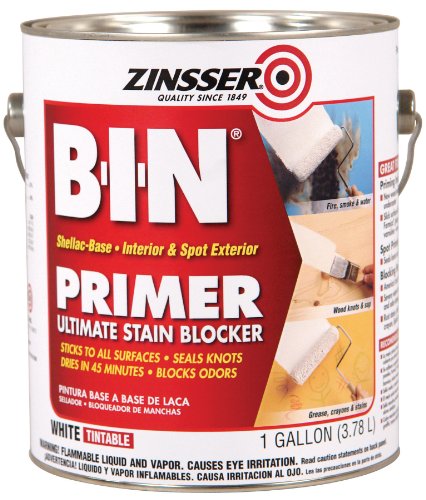
Rust-Oleum 901 Primer
What We Like
- Blocks stains and odors effectively
- No sanding needed before application
- Suitable for interior and spot exterior
Trade-offs
- Shellac odor requires good ventilation
- Heavier than smaller primer options at 10.6 pounds
A shellac base makes this primer the strongest stain sealer available, locking in pet, smoke, and musty odors in a single coat. For projects where you need to block stubborn stains or smells, that sealing power is a lifesaver. It sticks to all surfaces without sanding, saving you prep time. This is the primer to reach for when your project needs a reliable foundation that blocks surprises underneath.
The trade-off is the strong shellac odor, which demands good ventilation or a respirator while you work, something to plan for if you’re painting indoors. Compared to the Zinsser BIN Shellac Primer Spray, this Rust-Oleum comes in a larger 1-gallon size for bigger jobs, but the spray is more convenient for small touch-ups. If you want a single primer that handles tricky stains and odors, this is the one.
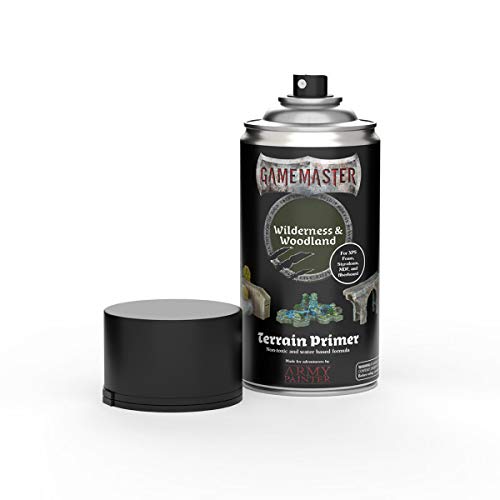
The Army Painter DnD Terrain Primer
What We Like
- Non-toxic and odorless formula
- Matte finish for terrain
- 100% color match to Crypt Wraith paint
- Safe on XPS foam, MDF, and fiberboard
Trade-offs
- Single color option (green)
- Not suitable for priming miniatures
This primer is water-based, non-toxic, and odorless, so you can spray MDF terrain indoors without worrying about fumes or corrosion. Its matte finish and 100% color match to Army Painter’s Crypt Wraith acrylic make it a no-fuss foundation for painting over, just spray and go, with no need for extra sealing steps. That direct compatibility with MDF, foam, and fiberboard means it handles exactly the materials terrain builders reach for most.
The Army Painter DnD Terrain Primer is a dedicated terrain primer, not a miniature primer. The nozzle and formulation are tuned for larger surfaces, so you won’t get the fine control needed for small figures. Compared to the Zinsser BIN Shellac Spray, which comes in a 369g can with a 10 to 12 sq-ft coverage area, the Army Painter’s odorless, non-corrosive formula is designed for indoor-friendly use on terrain materials. If you build terrain and want one can that works on MDF, foam, and fiberboard without extra prep, this is it.
Product photos
Rustins Quick Drying MDF Grey Primer

What We Like
- Quick-drying formula saves time
- Specifically designed for MDF surfaces
- Grey tint hides light wood grain well
- 500ml size suits small to medium projects
Trade-offs
- Only available in 500ml size
- Not a spray; requires brush or roller application
This 500ml primer is designed specifically for MDF, so it dries quickly and lets you move on to the next coat sooner than with general-purpose primers. The grey color helps hide the warm MDF surface, which can mean fewer topcoats for a consistent finish. For anyone working on shelves, cabinets, or craft pieces, that speed is a real time-saver.
At 500ml, this is a small can, good for a few shelves or a single cabinet door, but you will need multiple cans if you are priming a whole room of MDF panels. The product is listed as a primer/undercoat paint, so you will need a brush or roller and clean-up afterwards. Compared to a spray primer like the Zinsser BIN Shellac Primer Spray, this one requires more setup and care to avoid brush marks, but it gives you control over the application.
Product photos
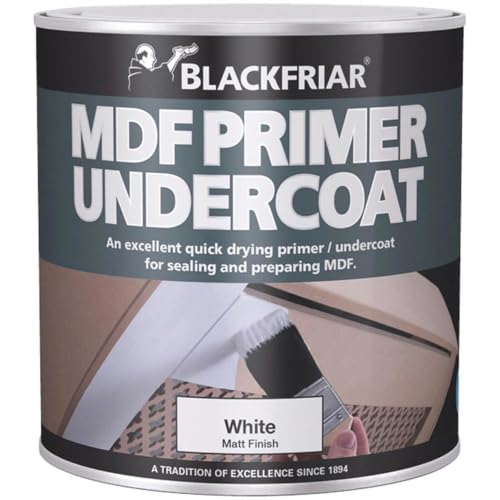
Blackfriar Quick Drying MDF Primer
What We Like
- Quick drying saves time
- Small 250ml can for small jobs
- White undercoat ready for paint
- Works as primer and undercoat
Trade-offs
- 250ml covers only small projects
- Not designed for heavy-duty sealing
At just 250ml, this Blackfriar primer is made for the small-scale MDF project, a single shelf, a picture frame, or a hobby box. Its quick-drying formula means you can prime and topcoat in the same afternoon, ideal when speed matters more than volume. For the budget-conscious DIYer who works on one piece at a time, this pint-sized can keeps waste low and workflow fast.
Blackfriar Quick Drying MDF Primer comes in a 250ml can, so if you’re priming a full bookcase or a wall of MDF panels, you’ll run out fast and need multiple cans. Compare that to the Rustins Quick Drying MDF Grey Primer, which offers 500ml in a single container for larger jobs. Blackfriar’s smaller size suits the occasional user who values a low upfront cost and a compact can that tucks easily into a toolbox.
Product photos
Zinsser BIN Shellac Primer Spray

What We Like
- Blocks stains, odors, and wood knots
- Seals knots and sap streaks
- Shellac-base formula for tough adhesion
- Spray format for quick, even application
Trade-offs
- Limited coverage of 10 to 12 sq-ft per can
- Spray only, not for large flat MDF panels
- Spot exterior use only, not full exterior
The 10 to 12 square-foot coverage per can means this spray is built for precision jobs, not rolling whole sheets of material. Its shellac-base formula seals knots, sap streaks, and stains, which makes it useful when you need to block those problems before painting. For anyone tackling a small project with visible wood knots or a surface that has been marked up, this primer stops those problems so your topcoat stays clean.
The Zinsser BIN Shellac Primer Spray weighs 0.8 pounds and is about the size of a tall soda can, so it fits in a small drawer. You will burn through it fast on anything larger than a shelf or a small cabinet face. Compared to the Zinsser B-I-N gallon, which gives you a full gallon for big jobs, this spray is best kept for spot priming where a brush or roller would be impractical. It is a specialist tool, not a one-size-fits-all primer.
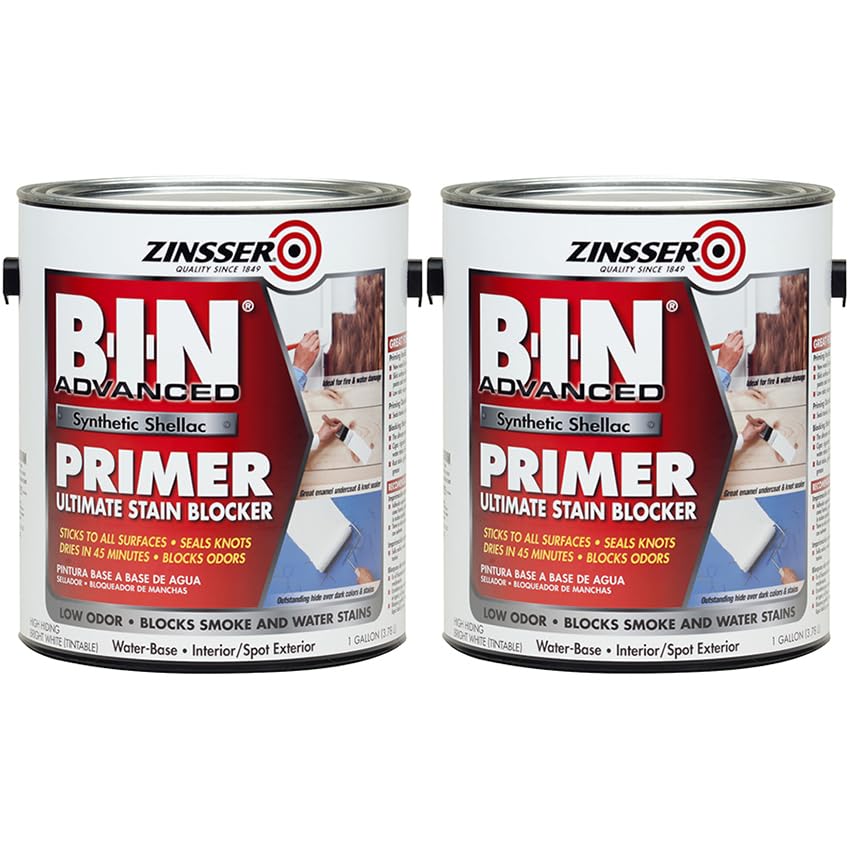
Zinsser B-I-N Advanced Synthetic Shellac Primer
What We Like
- Superior odor sealing
- Ultimate stain blocking
- High hiding bright white
- Excellent adhesion
Trade-offs
- At 22 pounds, heavy for one-hand use
- Not a spray format, requires brush or roller
This 2-pack of 1-gallon cans weighs 22.0 pounds total, so it’s a heavy purchase meant for larger jobs rather than quick touch-ups. The primer offers superior odor sealing, ultimate stain blocking, high hiding bright white, and excellent adhesion, making it a strong choice for covering problem surfaces before painting. The bright white base helps create a clean foundation, which can reduce the number of coats needed for your topcoat.
At 22 pounds, this stuff is heavy enough that you’ll think twice before hauling it up a ladder, and since it’s not a spray, you’ll need a brush or roller plus solvent for cleanup. For large projects like a built-in bookcase or a set of cabinet doors, its superior odor sealing and ultimate stain blocking make it a practical choice. For a small job, the Zinsser BIN Shellac Primer Spray weighs only 0.8 pounds, so it’s far easier to handle for quick touch-ups.
How We Evaluated Primers For MDF
Our evaluation is based on manufacturer product data, expert round-ups from painting and woodworking communities, and consistent patterns found in detailed owner feedback.
We focused on four criteria that matter most for MDF primers. Sealing performance was the top priority, how well the formula blocks the board’s natural stains, odors, and raised grain. Application ease weighed whether a primer requires sanding, what tools are needed (spray, brush, or roller), and how quickly it dries between coats. Safety and odor separated solvent-based shellacs from water-based or non-toxic options, as MDF projects are often done indoors or in hobby spaces. Finally, coverage and value considered can size and cost per project to match the primer to the job.
A research-led evaluation has limits: we cannot report on long-term adhesion or real-world durability, and owner experiences vary with surface prep and environmental conditions. What we can do is surface the best information so you can match a primer to your specific project needs.
What To Look For In Primers For MDF
Choosing an MDF primer comes down to how you apply it, where you work, and what you are sealing. Here are the key buying criteria to consider.
Match the primer to your project size and ventilation: spray cans for quick spot work, brush-on for small panels, and large-format cans for furniture or full sheets.
Sealing and Stain Blocking
MDF contains resins and waxes that can bleed through latex paint, leaving yellow or brown stains. A dedicated MDF primer should seal the surface and block these stains. Shellac-based primers like the Zinsser BIN line are known for superior stain and odor blocking, while water-based options may need two coats. If you are painting over raw MDF for the first time, a primer that explicitly says it blocks stains, not just adheres, is worth paying more for.
Application Method and Drying Time
Spray primers offer the smoothest finish and fastest application on small projects, but they can be wasteful on large panels and require good ventilation. Brush-on primers give you more control over coverage and are better for large flat surfaces, but they need a clean, lint-free application to avoid brush marks. Quick-drying formulas, such as the Rustins Quick Drying MDF Grey Primer, can cut your waiting time between coats significantly. If you are working in a tight schedule, look for a primer that dries to recoat in under an hour.
Safety and Fumes
Many effective MDF primers are solvent-based, meaning they have a strong odor and require a well-ventilated space or a respirator. If you are working indoors or in a shared hobby space, a non-toxic, odorless option like The Army Painter DnD Terrain Primer is a safer choice. Shellac primers clean up with denatured alcohol, while water-based primers clean up with soap and water. Consider your workspace before choosing.
- Check the label for “low VOC” or “non-toxic” if you are sensitive to fumes.
- For spray cans, confirm the can covers the square footage of your project.
- If you plan to paint over the primer, match the primer color (white, grey, or tinted) to your topcoat.
- For large furniture pieces, choose a brush-on primer in a quart or gallon size to avoid running out mid-project.
A good rule: if you can smell the primer strongly from across the room, you need more ventilation.
Primers For MDF Compared
The table below compares the six MDF primers across the criteria that matter most: sealing strength, application method, and best use case.
| Product | Base Type | Volume/Size | Weight |
|---|---|---|---|
| Rust-Oleum 901 Primer | Shellac | 1-Gallon | 10.6 Pounds |
| The Army Painter DnD Terrain Primer | Water-based | 10 oz | N/A |
| Rustins Quick Drying MDF Grey Primer | N/A | 500ml | N/A |
| Blackfriar Quick Drying MDF Primer | N/A | 250ml | 0.6 pounds |
| Zinsser BIN Shellac Primer Spray | Shellac-base | 369g | 0.8 pounds |
| Zinsser B-I-N Advanced Synthetic Shellac Primer | N/A | 1 gal | 22.0 pounds |
Frequently Asked Questions
Can I use regular wall primer on MDF?
Standard wall primers are not formulated to seal the dense fibers and resins in MDF. They can soak in unevenly, raise the grain, and allow stains to bleed through. A dedicated MDF primer or a shellac-based sealer is the better choice for a smooth, lasting finish.
Do I need to sand MDF before priming?
It depends on the primer. Some products, like the Rust-Oleum 901 Primer, are designed to be applied directly to raw MDF without sanding. Others may recommend a light sanding to knock down raised grain after the first coat. Always check the manufacturer’s instructions for the specific primer you choose.
How long does MDF primer take to dry?
Drying time varies by formula. Quick-drying primers can be ready for a second coat in under an hour, while standard shellac or water-based primers may need several hours. Temperature and humidity also affect drying time, so allow extra time in cool or damp conditions.
Is spray primer better than brush-on for MDF?
Spray primer gives a smoother, more even coat on small or detailed projects and is faster to apply. Brush-on primer is better for large flat panels because it avoids the overspray and waste of spray cans. The best choice depends on your project size and your comfort with each application method.
What is the best primer for sealing MDF odors?
Shellac-based primers are widely considered the best for sealing the strong, glue-like odors that MDF can emit. The Zinsser B-I-N Advanced Synthetic Shellac Primer is formulated specifically for superior odor sealing, making it a strong choice for indoor furniture or enclosed spaces.
The Bottom Line
If you need a heavy-duty sealer that blocks stains and odors from raw MDF without sanding, the Rust-Oleum 901 Primer is the best overall choice. It suits DIYers and painters tackling furniture, shelves, or panels where a reliable barrier is the top priority.
For hobbyists building MDF terrain who want a safe, odorless option, The Army Painter DnD Terrain Primer is a dedicated pick that works on foam and fiberboard too. Budget-focused DIYers with small projects will find the Blackfriar Quick Drying MDF Primer a low-waste, effective option.
The single most important factor in choosing an MDF primer is matching the formula to your workspace and project size. A shellac spray works beautifully for a single shelf, but a brush-on can of primer will save you time and money on a full sheet of furniture.
