
How to Paint an Accent Wall: Step-by-Step
This post contains affiliate links. As an Amazon Associate, we earn from qualifying purchases.
To paint an accent wall, pick the wall your eye lands on when you walk in, clean and patch it, tape the edges with 2-inch painter’s tape, cut in with a 2 1/2-inch angled brush, then roll in overlapping W passes. Let the first coat dry before the second.
That wall choice carries more weight than the color does. Sherwin-Williams points to the wall that comes into view opposite the main entrance, which is the surface your eye hits before it settles anywhere else in the room. Knowing how to paint an accent wall starts with picking that surface.
What follows is the order I’d work in: the two tools that actually matter, the wall test, the prep nobody budgets for, and the three different recoat numbers printed by three different brands when you compare a how to paint an accent wall.
Key Takeaways
- Pick the wall you see on entry. Sherwin-Williams names the wall opposite the main entrance; an empty wall chosen for convenience reads as disconnected.
- Prep is most of the job. A painting contractor quoted by This Old House puts surface preparation at 75 percent of project time.
- Recoat numbers don’t agree. Wattyl says 2 hours, Sherwin-Williams says 3, and its geometric guide says 4 between colors.
- Tape timing is disputed: Wattyl says pull while the paint is still wet, Sherwin-Williams says at a backward 45° angle while still tacky, Benjamin Moore says immediately after the final coat, This Old House’s House One crew says before the paint dries, and This Old House’s arch method waits until the wall is completely dry.
- Two tools cover the whole wall: a 2 1/2-inch angled brush and a 3/8-inch nap roller cover.
What You Need Before the First Stroke
Three things do the actual work here: the brush, the roller cover, and the tape, and the how to paint an accent wall question starts with them. Everything else is comfort.
Cut-in work calls for a 2 1/2-inch angled tip synthetic brush, while the field of the wall takes a roller frame fitted with a 3/8-inch nap cover. Tape runs 2 inches wide along trim, baseboards, ceilings, and the edges where the accent wall meets adjacent walls. The brush handles corners and edges; the roller covers the open field between.
Here’s the short list, and it fits in one shopping bag:
- A 2 1/2-inch angled tip synthetic brush for cutting in, the size This Old House’s House One crew uses on geometric walls.
- A 3/8-inch nap roller cover on a standard frame. Short nap keeps the texture even across a smooth wall.
- 2-inch painter’s tape along trim, baseboards, ceilings, and where the accent wall meets the other walls.
- Drop cloths, gloves, safety glasses and a mask, which Wattyl lists as standard protection for a wall repaint.
- A sanding sponge and a damp rag for filler dust.
You can skip the 40-piece starter kit. One decent brush, one roller cover, one roll of tape and a drop cloth will finish a single wall, and the leftover money is better spent on the paint itself.
Tape grade matters more than tape width on a wall with any texture. This Old House’s geometric build uses delicate-surface tape above the horizontal line and multi-surface tape along the baseboard, because those two surfaces grab differently. Common tan masking tape can leave adhesive residue behind, while blue painter’s tape peels off cleanly even after several days. I keep FrogTape multi-surface on hand for exactly that reason.
Which Wall Should You Actually Paint?
Sherwin-Williams answers it directly: the wall that comes into view opposite the main entrance to the room, while This Old House’s Mauro Henrique instead chose the wall meeting a sloped ceiling because the angle created interest. That’s the surface the eye lands on first, so a color change there reads as deliberate rather than accidental.
The wall opposite the entrance, and when to ignore it
This Old House’s Mauro Henrique went the other way on a nursery project, painting the wall that met the sloped ceiling because the angle created interest. Both rules are sound. They differ because the rooms differ, and that sloped plane was already the most interesting thing in the room.
An empty wall is a bad reason to pick a wall. Put the color where the room already has something going on: behind a bed, around a fireplace, behind a console that’s actually styled.
| Approach | Best For | Watch Out For |
|---|---|---|
| A few shades darker than the room | Subtle depth | Can read as a shadow in dim light |
| Strong contrast color | Rooms with one clear focal point | Trend colors flatten under real bulbs |
| A pattern instead of a block | Walls with nothing in front of them | More tape, more drying time |
Picking a color that survives real light
Sherwin-Williams suggests a color a few shades darker than the other walls, and notes that paint chips show a range of three to six shades within the same family. That range is the point. Take the chip home and look at it on your actual wall at night before you commit to anything.
The accent wall color decision is the one you’ll live with longest, so give it a day. Better still, test paint colors on a wall in a patch near the corner and check that patch at 8am and again at 8pm.
Bedrooms are their own problem. The light shifts twice a day and the wall is the last thing you see at night, which is why the bedroom accent wall guide treats color differently from a hallway.
Prep Eats 75 Percent of the Job
Painting contractor Jim Clark, quoted in This Old House Magazine, puts surface preparation at 75 percent of the time spent on a painting project. That figure explains why a single-wall job still takes far longer than the painting itself.
What to clean with (three answers)
Wattyl specifies sugar soap for greasy or heavily soiled surfaces, then a wipe with fresh water. Sherwin-Williams uses a cloth or cellulose sponge dampened with water and a little mild dishwashing liquid. Benjamin Moore uses damp rags or a sponge with warm water, starting at the top and working downward.
All three finish with a dry wall, but they disagree on the agent: Wattyl specifies sugar soap, Sherwin-Williams uses water with a little mild dishwashing liquid, and Benjamin Moore uses warm water. Pick by what’s actually on yours. Kitchen grease and handprints want the sugar soap. Ordinary dust comes off with warm water.
Do you need primer?
Wattyl builds its whole system around Accent Primer Sealer Undercoat or Accent Pigmented Sealer. Benjamin Moore says previously painted walls may not need priming at all, but unfinished drywall should be cut in with Fresh Start High-Hiding All-Purpose Primer.
My own rule, and it’s cheap to follow: going dark to light, the anecdotal YouTube advice is to prime, though Benjamin Moore says previously painted walls may not need priming and Wattyl builds its system around Accent Primer Sealer Undercoat or Accent Pigmented Sealer. The old color has to be blocked or it ghosts through the new coat.
Before you start: Sanding or scraping old paint can release lead dust and fumes, so a NIOSH-approved respirator and proper containment are not optional on pre-1978 walls. Keep a window or door open for ventilation while the coating is wet. In the US, the National Lead Information Center answers lead questions at 1-800-424-LEAD.
Then work in this order, and don’t skip ahead:
- Clear and tape the fixtures. Pull the plates off switches and outlets, then run tape around thermostats, baseboards, windows and doors. Skip it and you’ll spend time picking paint off a thermostat housing with a fingernail.
- Wash, then rinse. Residue left on the wall keeps the new coat from bonding, and the failure shows up later as a patch that lifts.
- Patch, sand, and lift the dust. Vacuum first, then wipe with a damp rag on an extension pole for the upper wall. Leftover grit reads as sandpaper texture under a fresh coat.
- Tape the edges and seal them. Press the tape edge down with a putty knife or a credit card. Unsealed edges bleed, and the bleed shows up as a fuzzy line.
Filler dust settles on surfaces, which is why the damp wipe earns its place after the vacuum.
How Long Do You Actually Wait Between Coats?
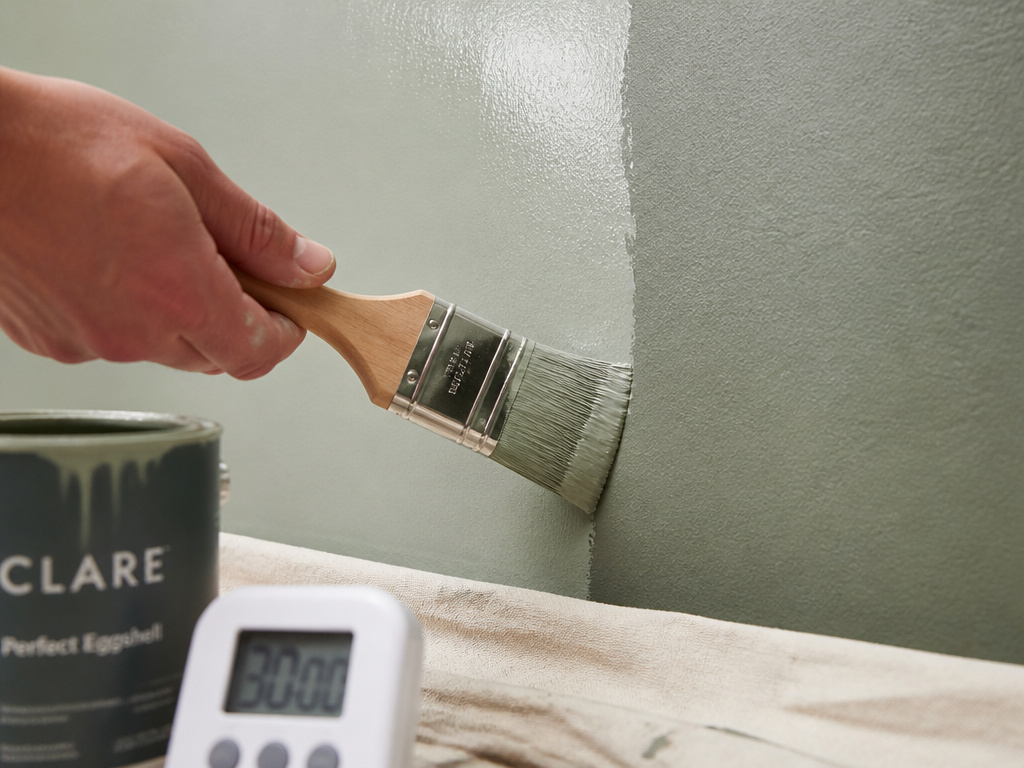
Three credible brands publish three different numbers for the same operation, so here they are side by side.
| Source | Wait Before Second Coat | Context |
|---|---|---|
| Wattyl Accent | 2 hours | Interior wall repaint |
| Sherwin-Williams accent guide | 3 hours | Second coat on an accent wall |
| Sherwin-Williams geometric guide | 4 hours | Between two colors on a pattern |
Benjamin Moore’s instruction is broader: let the first coat dry completely before the second. Its whole-room timeline runs two to three days.
Three credible brands give three different recoat numbers for the same wall. Follow the can in your hand, and treat the shorter number as a floor rather than a promise.
The number on your can beats any number on a blog, including this one. A recoat interval on a cold, damp day behaves like a much longer one, and no manufacturer can print a figure for your room.
Cutting In and Rolling Without the Ridge
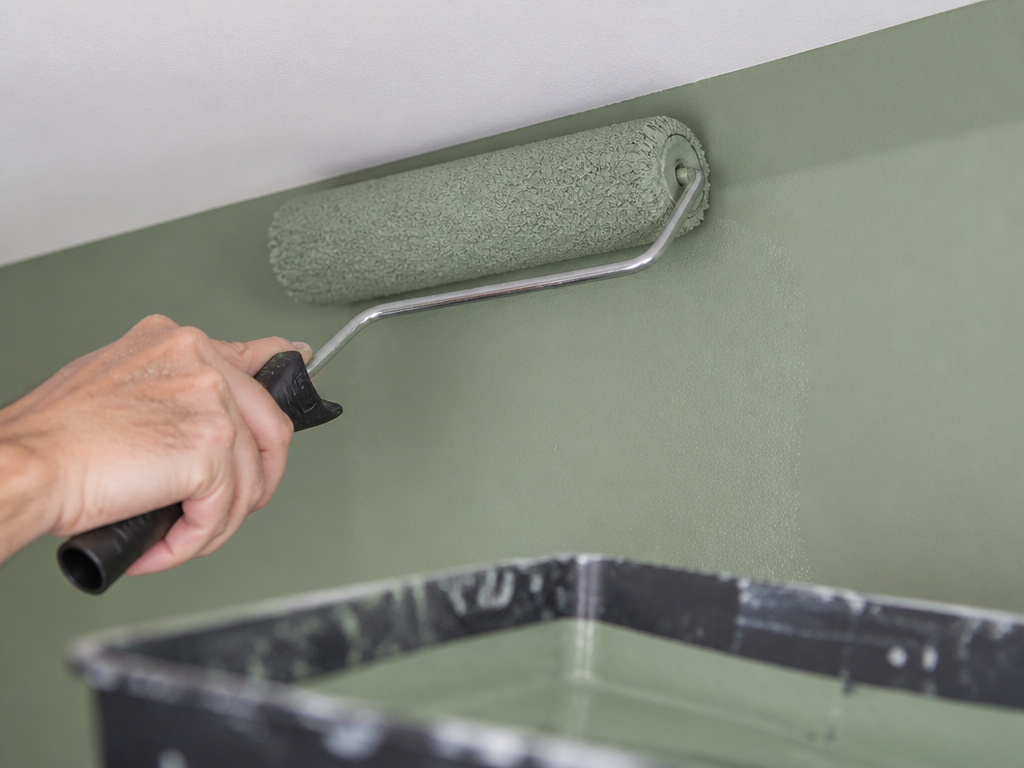
My first accent wall still has a scar I look at. I loaded the brush so heavily that the opening stroke left a ridge, and it dried into a cracked lump I couldn’t sand out without going back to bare wall. Thin layers built slowly look richer than one heavy pass.
The fix is unglamorous. Cut in along the edges with the brush first, then roll into that cut line with overlapping passes so the two areas merge while both are wet. Wattyl’s sequence is to load the roller and apply it to a section half a metre to a metre wide, then lay off with long gentle strokes from ceiling to floor.
Three things keep that wet edge alive:
- Work in narrow sections. Work in sections you can finish before the paint starts to set.
- Keep the roller moving and overlap each pass. This Old House’s crew uses short W-shaped passes for the same reason.
- Stir the paint before you start and again partway through. Pigment settles, and an unstirred can gives you a patchy final coat.
A roller loaded correctly lifts off the wall smoothly, while a dry one drags and pushes texture instead of paint.
Pour enough into the tray to cover the bottom of the pan, and no more, or the liner floats. If you want the full sequence for the open field of a wall, the roller and brush walkthrough covers it end to end.
When and How to Pull the Tape
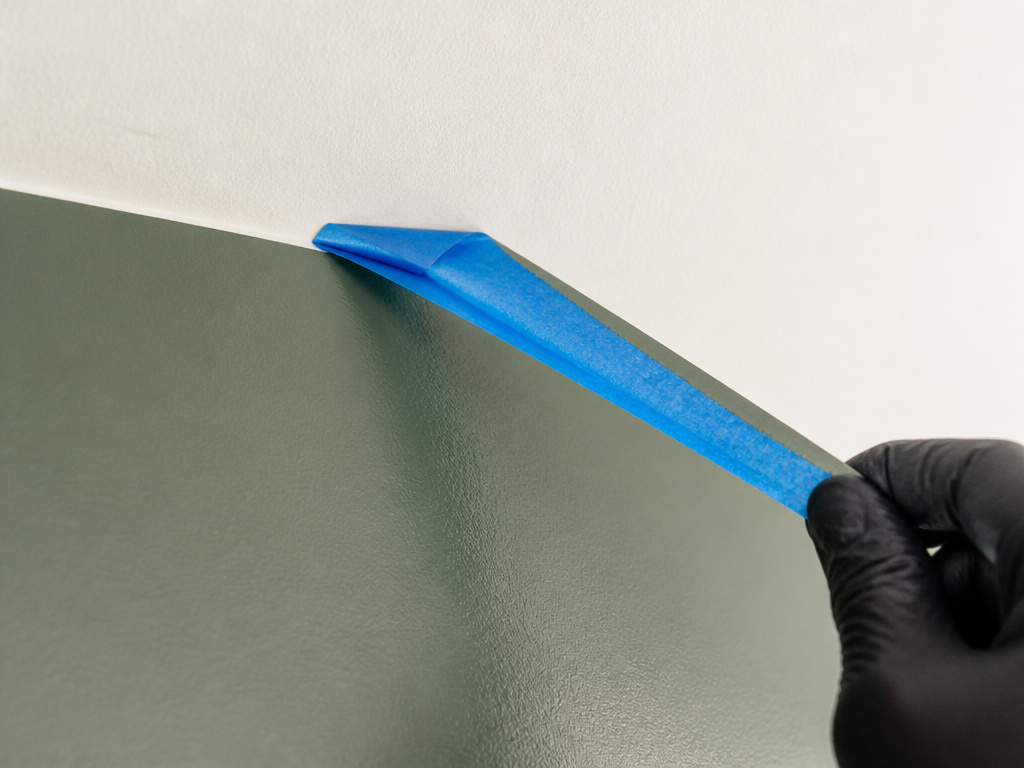
Tape timing is where a clean wall turns into a touch-up job, and the sources do not agree on when to pull it.
- Wattyl says remove the masking tape while the paint is still wet.
- Sherwin-Williams says pull at a backward 45° angle while the paint is still tacky.
- Benjamin Moore says remove it immediately after the final coat.
- This Old House’s House One crew says remove it before the paint dries, starting at the ceiling and pulling downward on an angle.
- This Old House’s arch method is the outlier: wait until the wall is completely dry, remove the tape, then brush-paint the gap the tape left behind.
Direction splits too. Sherwin-Williams pulls backward at 45°. This Old House pulls toward the painted side at 45° on a flat surface, and away from the painted surface at 45° in a corner between two perpendicular surfaces.
Common mistake: Leaving tape on until the wall is bone dry on a flat painted edge. The film bridges the seam between wall and tape, and the tape takes cured paint with it when it finally comes off.
Tape that waited too long can come away with dried film attached to the adhesive, while tape pulled at the right moment leaves a hard, straight edge. That difference is the whole reason the timing arguments exist.
For the edge itself, the mechanics of a clean paint line matter as much as the tape brand.
Patterns, Arches, and Other Things That Break the Rules
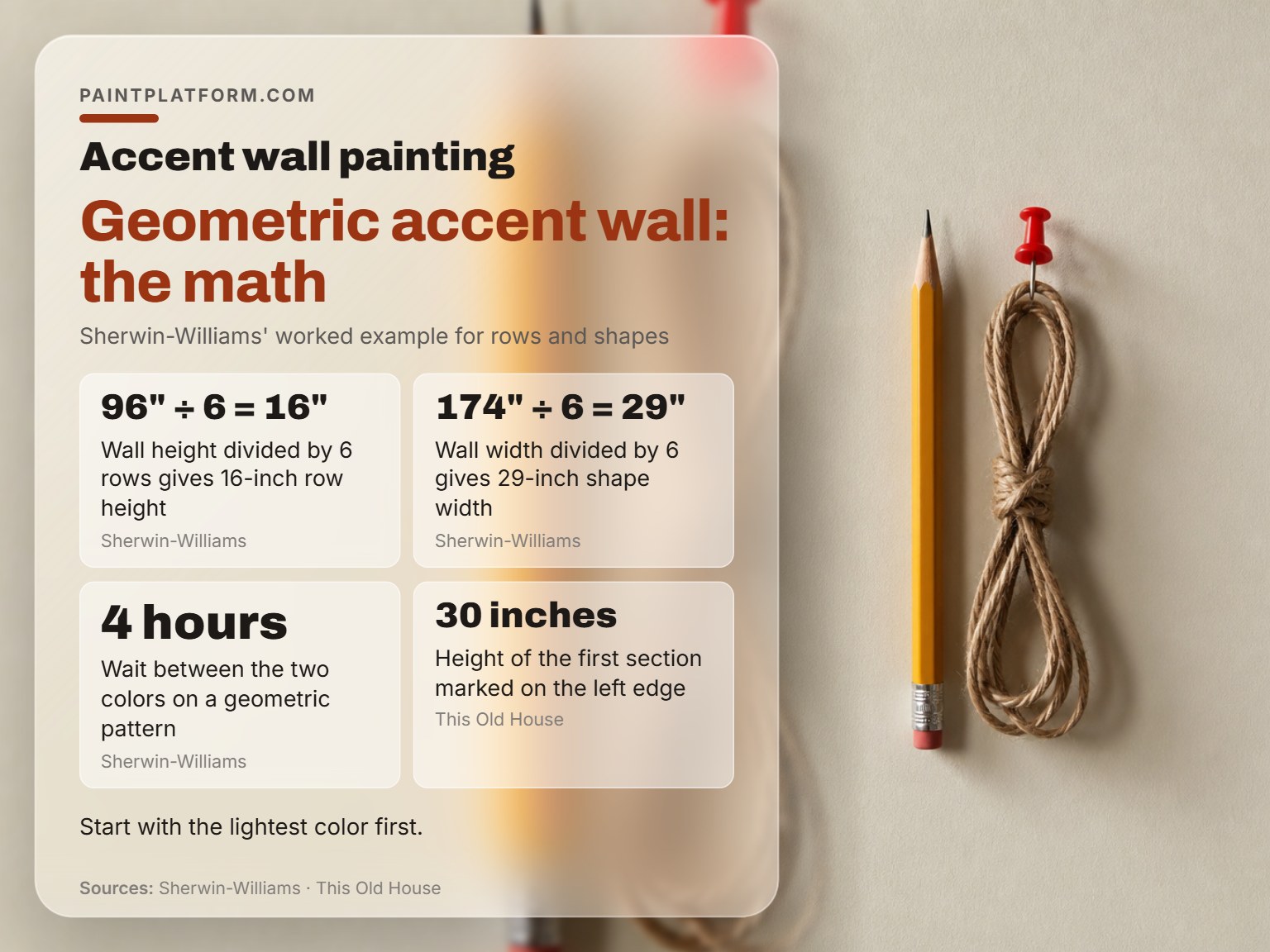
Sherwin-Williams’ geometric guide does the arithmetic for you: a 96-inch wall height divided by 6 rows gives 16-inch rows, and a 174-inch width divided by 6 gives 29-inch shapes. Measure your own wall, divide by the number of rows you want, and mark it lightly in pencil.
Geometric patterns
Popular options are herringbone, chevron, hexagon, harlequin and trellis. Start with the lightest color first, which is Sherwin-Williams’ recommendation and also the forgiving choice, because a pale base is easier to cover if a line goes wrong. Leave 4 hours between the two colors on a pattern.
This Old House’s version marks the first section at 30 inches high on the left edge, then runs an angled line from that mark to the bottom-right corner. The full sequence lives in the geometric accent wall guide, and the color plan from that build is worth stealing: Pure White SW 7005 as the base, Salty Dog SW 9177 and Byte Blue SW 6498 on top. For an entryway that takes wear, that crew used Sherwin-Williams Emerald Interior Paint because it’s durable and washable.
Stripes and gradients follow the same taping logic with different math. A striped accent wall is the easier of the two, and an ombre accent wall hides a wobbly line better than a hard stripe ever will.
Arches and curves
Straight tape fails on a curve. This Old House’s method wraps a length of string around a pencil, pins the free end at the arch center with a pushpin, and draws a semicircle from mark to mark. Low-tack tape goes along the outside of that outline in small pieces, wrapped around the curve rather than stretched across it.
Skip this if: Your home has no curves anywhere else in it. A painted arch dropped into a room full of right angles can read as a trend rather than a decision.
Frequently Asked Questions
Do I need to prime before painting an accent wall?
It depends on the wall and the direction of the color change. Wattyl builds its system around Accent Primer Sealer Undercoat or Accent Pigmented Sealer. Benjamin Moore says previously painted walls may not need priming, but unfinished drywall should be cut in with Fresh Start High-Hiding All-Purpose Primer. Going dark to light, the anecdotal YouTube advice is to prime, though Benjamin Moore says previously painted walls may not need priming and Wattyl builds its system around Accent Primer Sealer Undercoat or Accent Pigmented Sealer.
How long should I wait between coats on an accent wall?
Wattyl says 2 hours, Sherwin-Williams says 3 hours on its accent wall sheet, and its geometric guide allows 4 hours between two colors. Benjamin Moore simply says let the first coat dry completely. Follow the can you bought, and add time in cold or humid conditions.
Should I remove painter’s tape while the paint is wet or dry?
On a flat painted edge, sources disagree: Wattyl says pull while the paint is still wet, Sherwin-Williams says while still tacky at a backward 45° angle, Benjamin Moore says immediately after the final coat, and This Old House’s House One crew says before the paint dries. This Old House’s arch method is the exception: there you wait until the wall is completely dry, remove the tape, and brush-paint the thin gap the tape left behind.
What if my wall has texture?
Sealing the tape edge is the whole game. Sherwin-Williams presses the edge down with a putty knife or a credit card to stop bleed, and a base-color seal coat over the tape line does the same job on a rougher surface. Delicate-surface tape above the line and multi-surface tape at the baseboard is the combination This Old House uses.
Can I finish an accent wall in one afternoon?
This Old House estimates the three-color geometric wall at 6 hours. The part that stretches it is drying time between coats, not brushwork. Benjamin Moore’s two-to-three-day figure is for a whole room.
Before You Go
One threshold worth setting before you buy paint: if your wall has any sheen above matte and any imperfections at all, fix the wall first. Benjamin Moore’s guidance is blunt about it, because a flat or matte finish forgives what semi-gloss and gloss will show you under a lamp at seven in the evening.
And here’s the part that decides whether this project builds confidence or kills it. One wall, one color, one tape line. That’s the whole job, and it’s winnable.
Try this today. Tape a 2-inch strip along your baseboard, press the edge down with a credit card, paint it with the color you’re considering, and pull the tape while the paint is still tacky. One strip tells you how that color behaves in your light.
